Most homeowners think of their windows as either “single” or “double” and leave it at that. But the pane itself, the actual sheet you’re looking through, comes in many different types, each engineered for a specific purpose.
Choosing the right specification is essential. The wrong specification means failing Building Regulations, compromising security, or missing out on energy savings that could pay for the upgrade within a few years. The right glass for your kitchen door is different from what belongs in your bedroom or your period front elevation.
At Wooden Windows Online, we specify glazing for every window we manufacture, matching the type to the location, the performance requirement, and the property style. This article explains the different options available so you can make informed decisions about what goes into your timber windows.
What You’ll Discover in This Article
- What makes float, toughened, and laminated options different, and when each matters
- Why Building Regulations require specific types in certain locations
- How Low-E coatings and solar control options improve energy performance
- What acoustic and obscure options offer for noise and privacy
- How heritage and decorative choices maintain period authenticity
- How to choose the right type for each window in your home
Quick Comparison: Glazing Options at a Glance
| Type | Key Benefit | Typical Use | Relative Cost |
|---|---|---|---|
| Float | Clarity, baseline | Standard windows | Baseline |
| Toughened | 4-5x stronger, safe breakage | Doors, low-level, bathrooms | +10-15% |
| Laminated | Holds when broken, acoustic | Security, noise reduction | +20-30% |
| Low-E | Reflects heat, cuts U-value | All windows (standard spec) | +5-10% |
| Solar control | Limits solar gain | South/west-facing | +15-25% |
| Obscure | Privacy | Bathrooms, side windows | +5-10% |
Float Glass: The Standard Starting Point
What It Is
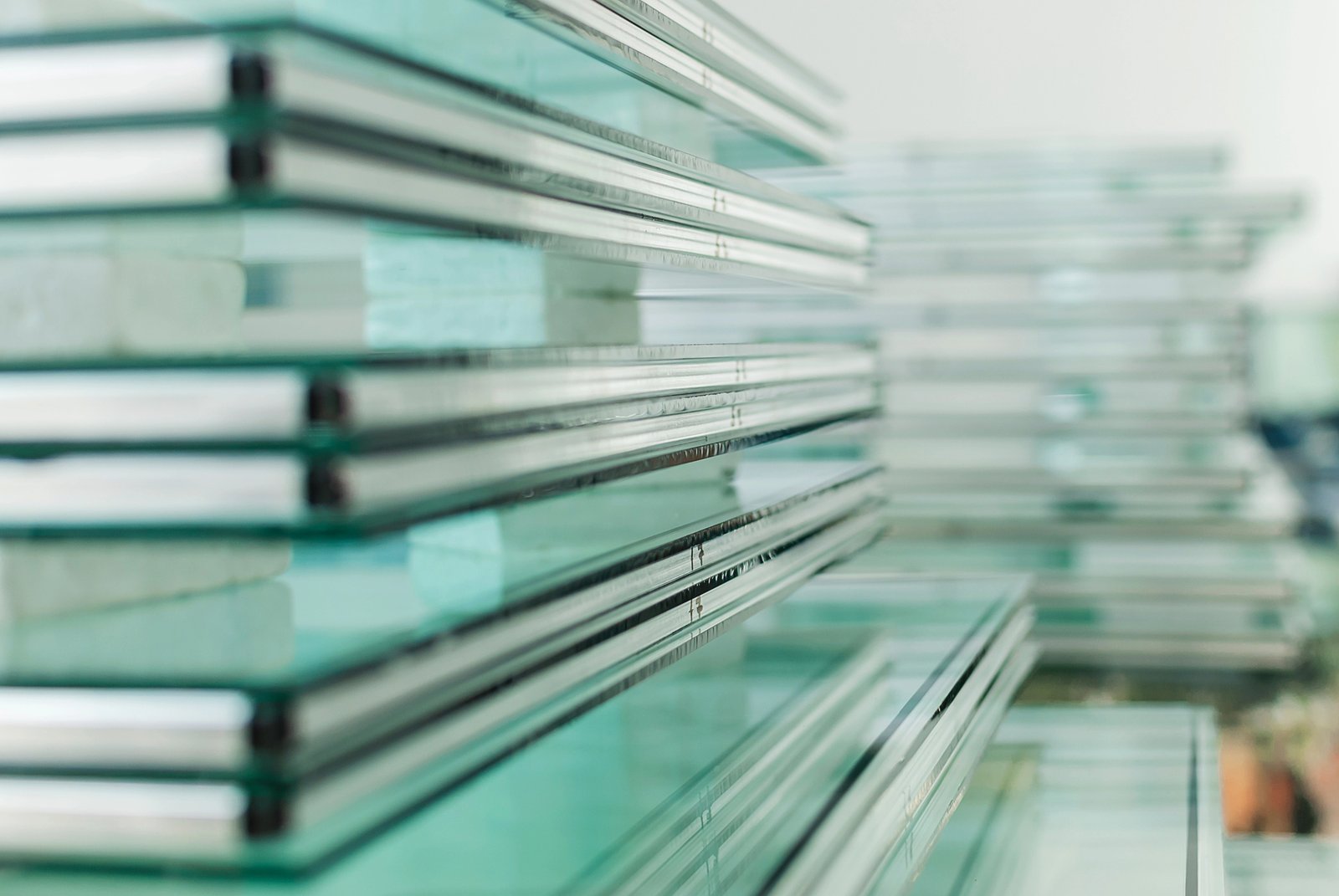
Float glass is the standard, ordinary glass that forms the basis of virtually every window pane. It’s manufactured by floating molten material on a bed of liquid tin, a process that produces perfectly flat, optically clear sheets with consistent thickness.
This is the baseline. Every other variety of glass starts as float and is processed further. Different glass types begin with this same material: heated, coated, laminated, or treated to give it specific properties. Standard float has no special safety, thermal, or acoustic characteristics. It simply lets light through and keeps weather out.
Thickness and Clarity
Float comes in thicknesses from 2mm to 25mm, though 4mm and 6mm are standard for windows and doors. Thicker sheets reduce noise transmission slightly and feel more substantial, but thickness alone doesn’t make glass safer or more energy efficient.
Low-iron glass has a distinct clarity that standard float lacks, removing the slight green tint visible at the edges of ordinary glass. This clarity advantage makes it the preferred choice for generous openings and contemporary architecture where maximum transparency matters.
Toughened Glass: Strength and Safety
How Toughening Works
Toughened, also called tempered glass, is made when standard float glass is toughened by heating it (technically called annealed glass) to around 620°C and then rapidly cooling it. This process creates internal tension that makes the finished product roughly four to five times stronger than standard glass of the same thickness.
The real benefit isn’t just strength. It’s what happens when it breaks. Toughened shatters into thousands of small, relatively harmless granules rather than the dangerous shards of glass that ordinary float produces. That’s why it’s classified as safety glass.
Where Building Regulations Require It
You don’t always get to choose. Building Regulations specify toughened or laminated safety options in several locations:
- Any pane within 800mm of floor level in doors and windows
- Glass doors and side panels adjacent to doors
- Windows in bathrooms where someone might fall against them
- Low-level glass panels and skylights to avoid falling glass
- Large window areas in locations with high foot traffic
For timber windows, we specify the correct safety type for each position as standard. On a recent project — a Victorian terrace in Bath with 14 windows across three floors — we specified toughened in every ground-floor and bathroom position, laminated for the front door side panels, and standard Low-E float for the upper floors. Each window, different glass. It’s not an upgrade — it’s a compliance requirement.
Laminated Glass: Security and More
How Laminated Construction Works
Laminated glass consists of two or more layers of glass bonded together with an interlayer, typically PVB (polyvinyl butyral). If the outer laminated pane of glass breaks, the interlayer holds the fragments together rather than letting them fall. The result: the pane cracks but the glass holds together and stays in the frame.
This makes laminated the preferred choice for security glazing. An intruder can break the surface, but actually getting through requires sustained effort, buying precious minutes. Laminated glass also qualifies as safety glass under Building Regulations, making it an alternative to toughened in regulated positions.
Acoustic and UV Benefits
This glass is also excellent for acoustic properties. The PVB interlayer dampens sound vibrations far more effectively than a single solid sheet. Acoustic glass is specialist glass installed specifically for noise reduction, typically a laminated construction with an enhanced acoustic interlayer. Acoustic glass mainly reduces noise in the 1,000-3,000 Hz range where traffic and human speech sit.
Standard low-iron glass allows more UV to pass through, which is why this interlayer matters. Glass allows more UV light than most people realise. The PVB interlayer is effective at blocking up to 99% of UV light through the glass, protecting furnishings, artwork, and flooring from sun damage. Standard float blocks virtually none.
Low-E Glass and Coated Options
Low-E: The Energy Efficiency Standard
Low-E (also written low e glass) is the premier type of energy-efficient glass coating. Low-e glass is a type of coated float that has. A microscopically thin metallic coating that reflects infrared heat radiation back into the room. You can’t see it, but it transforms thermal performance. Low-E glass acts as insulation, keeping warmth in during winter and, in some configurations, limiting solar gain in summer.
There are two main types. Hard coat Low-E is applied during manufacturing. Durable but less efficient. Soft coat is applied in a vacuum chamber. More delicate but significantly more effective, reflecting up to 95% of infrared radiation. We use soft coat as standard.
In a double-glazed unit, Low-E coating typically reduces the U-value from approximately 2.0 to 1.2-1.4 W/m²K. That’s a meaningful improvement in energy performance from something invisible. Glass technology has progressed dramatically in this area over the past two decades.
Solar Control Options
Solar control glass is designed to limit the amount of solar energy entering through the window. The purpose of control glass is to avoid overheating in south-facing rooms and conservatories, without significantly reducing visible light.
Tinted glass (bronze, grey, or green) reduces both solar gain and light transmission. It’s straightforward and cost-effective but does make rooms darker. Modern spectrally selective coatings are more sophisticated: they block infrared heat while allowing visible light through. Glass that can allow light in while rejecting heat is the ideal glass solution for large glazed areas.
Solar control makes most sense when specifying different glass for each window position on south and west elevations. North-facing glass for increased solar gain, using clear or enhanced solar-gain Low-E, is typically the better specification.
Heritage and Decorative Glass Choices
Period-Appropriate Options
For listed buildings and conservation areas, choosing the right specification goes beyond performance. The visual character matters. Crown-effect or restoration-grade float replicates the subtle distortions of hand-made period panes: the slight ripples and variations that give old windows their character.
Obscure glass, sometimes called patterned or textured glass, provides privacy while admitting light. This type of glass can be used anywhere privacy matters. Multiple patterns are available, from the subtle (satin or stippled) to the decorative (reeded or fluted). Bathrooms and ground-floor side windows benefit from obscure options that remove the need for blinds or frosted film.
Leaded Lights and Decorative Panels
Leaded light construction, with individual pieces held together by lead came, remains the authentic approach for period properties. Modern alternatives include applied lead strips (cheaper, less authentic) and sandblasted decorative panels.
Heritage work demands glass for your windows that matches the original specification as closely as possible. That might mean hand-blown cylinder restoration sheets for a Georgian property, or textured rolled varieties for an Edwardian bathroom. Getting this right is part of choosing the right specification for period buildings — the right window glass is essential for heritage authenticity. Conservation officers notice incorrect glazing just as readily as incorrect frame profiles.
Choosing Glass for Your Timber Windows
Choosing the right window glass isn’t a single decision — it’s a series of choices matched to each opening. The right type of glass for one position may be entirely wrong for another.
At Wooden Windows Online, we handle this complexity for you. Every window we manufacture includes the correct specification for its position, with energy-efficient glazing as standard, with toughened, laminated, acoustic, obscure, and heritage options specified where needed. Each glass unit is made to measure for the window frame it sits in.
The many different types of glass available today mean there’s no need to compromise. Performance, safety, acoustics, privacy, heritage. You can have exactly the right specification for every pane in your home.
Frequently Asked Questions
What are the main types of glass used in windows?
–
+
The main types are float (standard), toughened (safety), laminated (security and acoustic), Low-E (energy efficiency), solar control (heat management), and obscure (privacy). Most double-glazed units use insulated glass, combining two or more. For example, a toughened outer layer of glass with a Low-E coated inner. Triple units use three panes of glass for maximum performance, with insulating glass unit construction and argon gas fill between two panes of glass separated by a spacer.
Where is toughened glass required by law?
–
+
Building Regulations require safety glass (toughened or laminated) within 800mm of floor level, in glass doors and adjacent side panels, in bathrooms, and in certain overhead positions like skylights. Your window manufacturer should specify the correct type for each position automatically.
Is laminated glass better than toughened for security?
–
+
Yes. Laminated glass holds together when broken. The interlayer keeps fragments in place, making it far harder to breach than toughened, which shatters completely (safely, but completely). Doors and ground-floor windows need security. Laminated is the stronger choice. It’s also the preferred choice where both safety and security are needed.
What glass is best for noise reduction?
–
+
Acoustic laminated with an enhanced PVB interlayer. This is specialist glass installed where road noise, aircraft, or neighbours are a problem. For best results, use different thicknesses in each pane of glass. For example, 6.4mm laminated outer with 4mm float inner, as the variation disrupts sound transmission more effectively than matched panes of glass separated by a standard cavity.
Do I need special glass for a listed building?
–
+
Often, yes. Conservation officers may specify restoration-grade float, crown-effect sheets, or hand-made cylinder varieties to match the original character. The right specification is essential for planning approval on heritage properties. Your specialist should advise on the appropriate specification.
Conclusion
Request your free quote today and we’ll help you specify the right glazing for every window in your project.
Our Best-Selling Timber Windows: