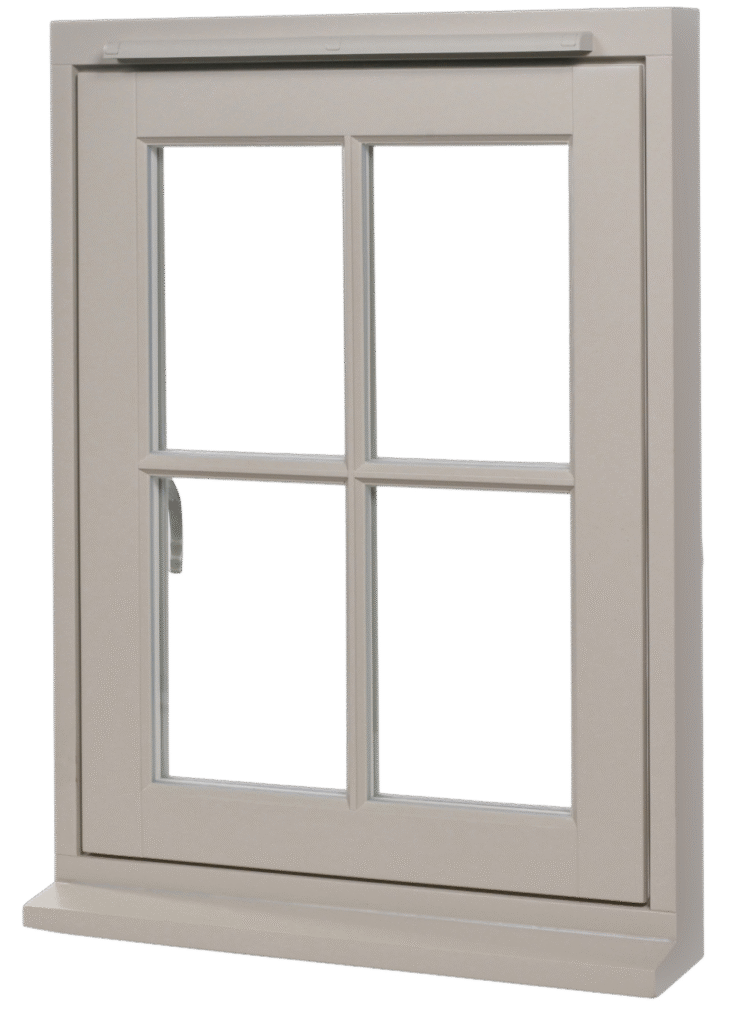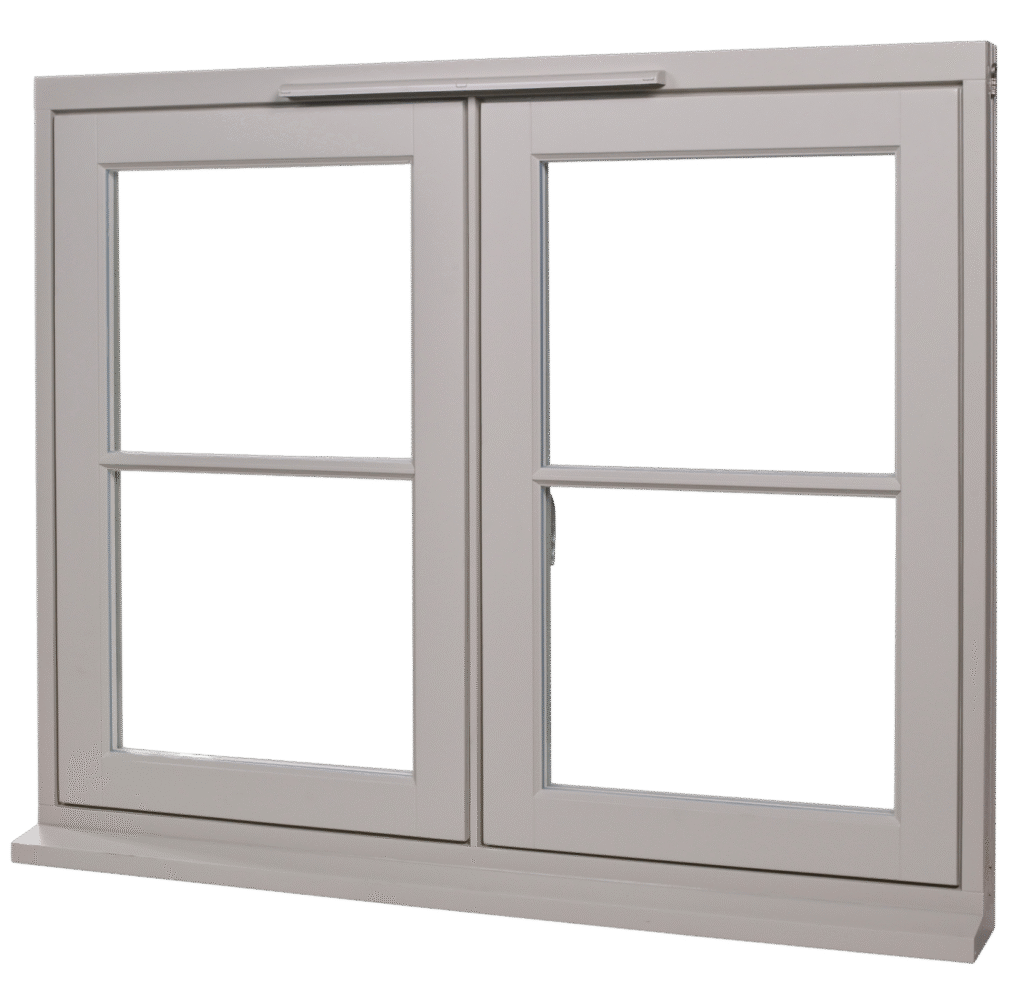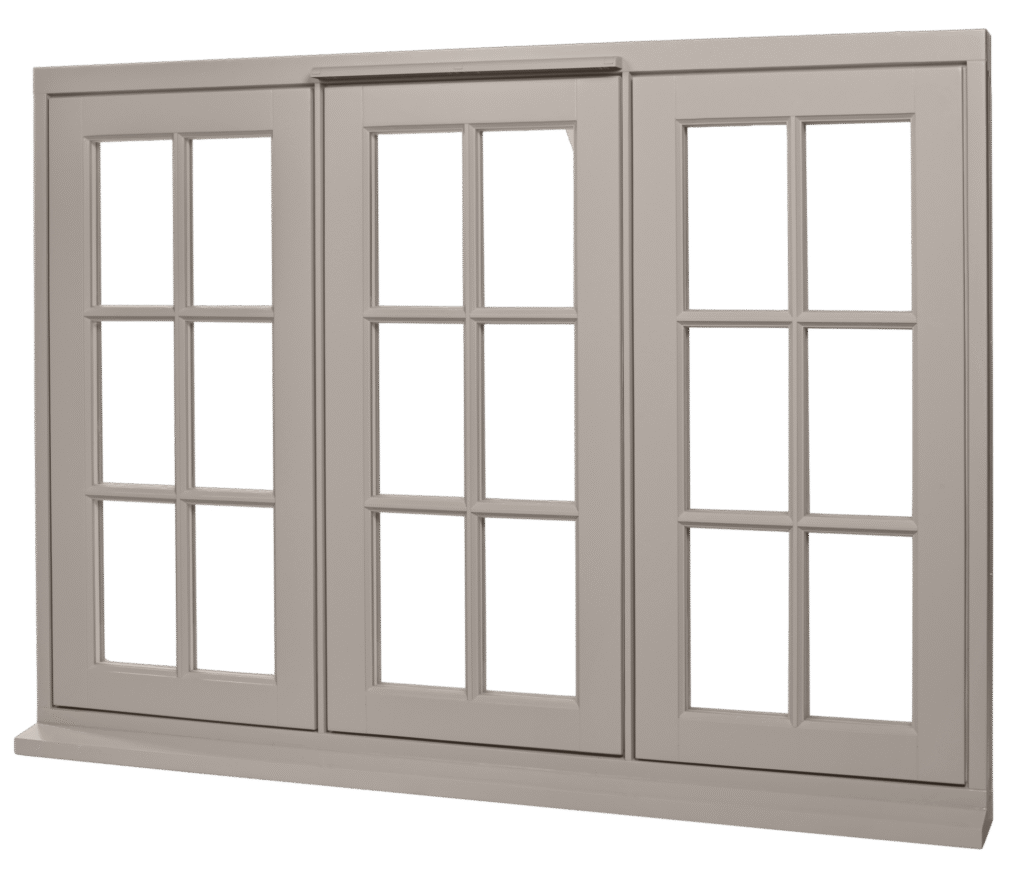
Open any casement window and you’re performing an action that homeowners have repeated for over five hundred years. Push the handle, swing the sash outward, feel fresh air flood the room. The mechanism is so intuitive, so naturally right, that it hasn’t needed reinvention—only refinement.
What You’ll Discover in This Article
- The medieval origins of casement windows and why this simple concept has endured for centuries
- How casements evolved through Georgian, Victorian, and Edwardian architectural periods
- The difference between side-hung casements, top-hung vents, and French casement windows
- Today’s innovations that make timber casements more secure and efficient than ever
- Why casement windows suit both period and contemporary homes equally well
Introduction
I’ve spent fifteen years working with timber windows, and casements are the style I recommend most often. Not because they’re the only option—sash windows have their place, and so do fixed panes—but because casements offer something unique: genuine versatility. They work equally well in a Tudor cottage and a contemporary extension, in a conservation area terrace and a 1960s bungalow. That adaptability isn’t accidental. It’s the result of centuries of architectural refinement.
What fascinates me about casement windows is how the core concept has stayed constant while everything around it has changed. The hinged sash that opens outward like a door—that’s unchanged since medieval craftsmen first hung small leaded panes in oak frames. But today’s timber casements incorporate multi-point locking, friction stay hinges, high-performance double glazing, and finishes that last decades. The soul of the window endures; the technology has transformed.
This guide traces that evolution, from medieval origins through Georgian refinement to 21st-century innovation—and explains why casement windows are still the natural choice for so many UK homes.
A Timeless Concept: The Medieval Origins of Casement Windows
The casement window emerged from practical necessity. Medieval buildings needed openings for light and ventilation, but glass was expensive and available only in small pieces. The solution? Mount those precious panes in a hinged frame that could swing open when needed and close securely against the elements.
Early Construction: Lead, Iron, and Oak
The earliest casement windows, appearing in English buildings from the 14th century onward, featured small diamond or rectangular panes held together by lead cames—the H-shaped strips that form the distinctive lattice pattern still seen in historic properties today. The entire glazed panel sat within an iron or oak frame, hinged at one side with simple wrought-iron pivots.
I visited a property in Suffolk last year—a timber-framed hall house dating to the 1480s—where three original casement openings survived in the parlour. The glass was long gone, replaced countless times over five centuries, but the oak frames and iron hinges were original. Five hundred years of service. That’s the durability that proper timber construction delivers, and it’s why we continue using engineered timber for casements today—updated materials, same inherent longevity.
The Elizabethan Flourishing
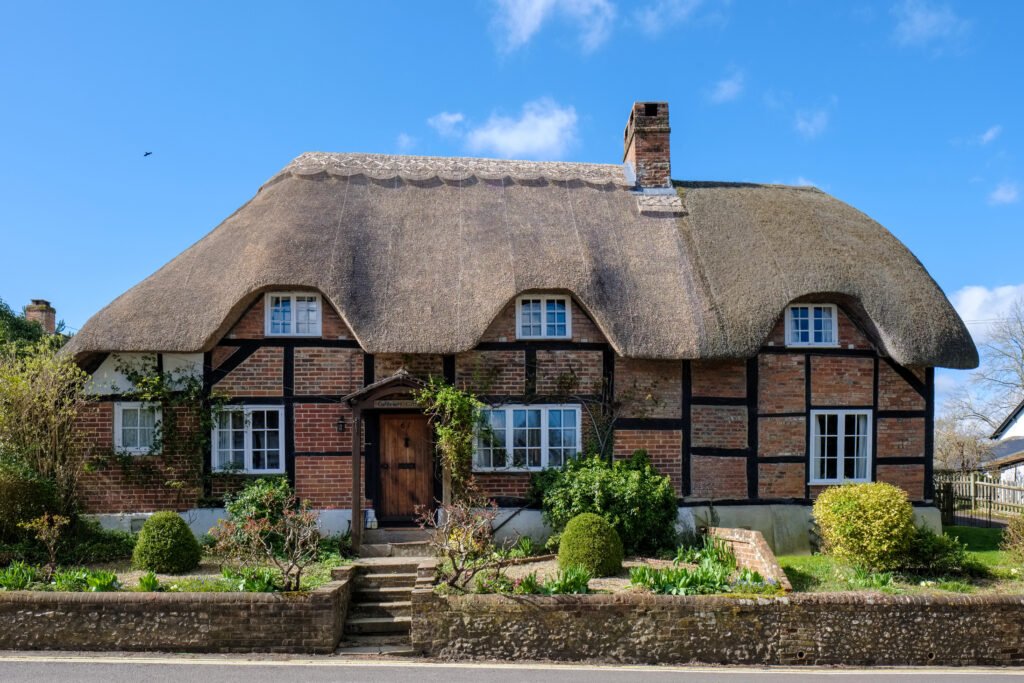
By the Tudor and Elizabethan periods, casement windows had become architectural statements. The great houses of the era—Hardwick Hall, Montacute House, Little Moreton Hall—featured vast expanses of glass that would have been unthinkable a century earlier. “Hardwick Hall, more glass than wall” ran the famous rhyme, and those windows were predominantly casements, arranged in grids of small panes.
The layout was simple but effective: a rectangular frame divided by mullions (vertical bars) and transoms (horizontal bars), with each section containing either a fixed pane or an opening casement. A wrought-iron latch, often beautifully crafted, secured the sash when closed. This arrangement—fixed lights combined with opening casements—is still standard practice in timber window work today.
According to Historic England, these early casement layouts established principles that influenced English domestic architecture for centuries. The proportions, the relationship between glass and frame, the method of subdivision—all trace back to Tudor innovations.
The Renaissance and Beyond: Architectural Adaptations
As architectural fashions evolved, so did the casement window. Each period adapted the basic hinged arrangement to suit changing aesthetics, while the core mechanism—a sash swinging on side hinges—stayed constant.
Georgian Refinement: Classical Proportions
The Georgian era (1714-1830) brought classical proportions to English architecture, and windows reflected this shift. While sash windows dominated fashionable townhouses, casements held their place in cottages, rural properties, and service areas of grander buildings.
Georgian casements typically featured six or eight panes per sash, with slender glazing bars creating attractive subdivisions. The proportions followed classical rules—height roughly 1.5 to 2 times the width—and the overall effect was one of balanced refinement. These proportions are still the gold standard for period-appropriate casement specification.
We supplied windows last spring for a Grade II listed cottage in the Cotswolds—a 1780s honey-stone building with original casement openings. The conservation officer was very particular about glazing bar profiles and pane proportions. We matched the originals precisely: ovolo mouldings, 18mm glazing bars, six panes per sash. When the windows went in, even the neighbours couldn’t tell them from the originals. That’s what accurate period detailing achieves.
Victorian Innovation: The Bay and Beyond
Victorian builders embraced casements with characteristic enthusiasm, incorporating them into increasingly elaborate configurations. Bay windows—projecting outward in rectangular or canted arrangements—became ubiquitous in Victorian terraces, and casements were the natural choice for the angled side lights where sashes couldn’t operate effectively.
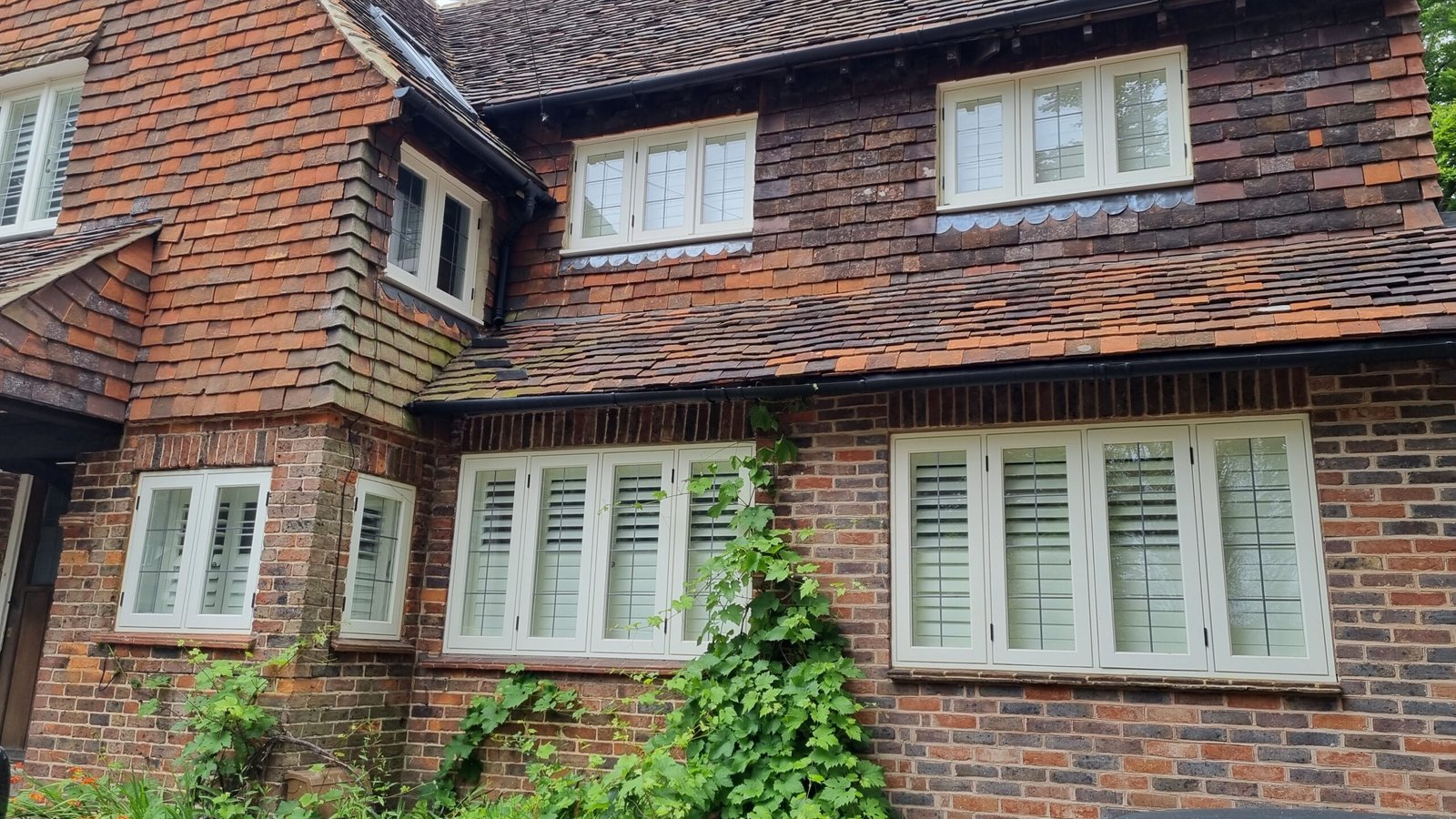
The Victorian period also saw the development of the flush casement—where the sash sits flush with the frame when closed, creating a smooth, uninterrupted exterior surface. This style became particularly associated with Arts and Crafts architecture and is still popular today for its clean, honest aesthetic.
I find Victorian casement detailing endlessly varied. Some feature elaborate horns and mouldings; others are almost austere in their simplicity. Each reflects the tastes and budget of the original builder, and when we’re replacing windows in Victorian properties, matching that specific character matters enormously.
The French Casement: Continental Style
One important variation deserves special attention: the French casement (sometimes called French windows when floor-length). Unlike standard casements, French casements feature two sashes meeting in the centre with no fixed mullion between them. When both sashes open, you get an unobstructed opening—perfect for balconies, garden access, or simply maximising ventilation and views.
The arrangement originated—as the name suggests—in 17th-century France, where floor-to-ceiling windows opening onto formal gardens became fashionable in aristocratic houses. English architects adopted the style enthusiastically, and French casements became standard features in Georgian and Regency homes with garden aspects.
A client in Richmond recently commissioned French casements for a Victorian conservatory restoration. The original windows had rotted beyond repair, but we had photographs showing the configuration: two full-height sashes meeting in the centre, each with twelve panes, opening outward onto a tiled terrace. The new windows transformed the space—suddenly, inside and outside flowed together exactly as the Victorian builders intended.
21st-Century Casements: Functionality Perfected
Walk into any timber window workshop today and you’ll see casements that would astonish a Victorian craftsman—not in their basic form (still a hinged sash in a frame) but in their engineering. Contemporary timber casements represent centuries of refinement combined with cutting-edge technology.
Security Transformed: Multi-Point Locking Systems
Perhaps the most important recent innovation is the multi-point locking system. Traditional casements relied on a single latch or cockspur handle—effective against weather, less so against determined intruders. Current casement hardware engages multiple locking points simultaneously: typically two, three, or even five bolts shooting into keeps around the frame perimeter.
The security improvement is dramatic. A window with correctly installed multi-point locking can achieve PAS 24 security certification—the standard required by many insurers and increasingly demanded by Building Regulations for new builds and conversions. The mechanism operates through a single handle, so security doesn’t compromise convenience.
We installed casements last month in a ground-floor flat in Clapham—always a security-conscious situation. The owner had been quoted for aluminium windows partly on security grounds. We demonstrated that our timber casements with shoot-bolt locking actually exceeded the aluminium specification. She went with timber, and her insurers were entirely satisfied.
Friction Stay Hinges: Precision Engineering
Traditional casement hinges allowed the sash to swing freely—useful for full ventilation but requiring a separate stay or catch to hold the window at intermediate positions. Friction stay hinges solve this neatly. The hinge mechanism includes controlled friction that holds the sash at any opening angle without additional hardware.
The practical benefits extend beyond convenience. Friction stays allow the sash to be reversed for cleaning—you can reach the external glass surface from inside, invaluable for upper-floor windows. They also incorporate restrictor options that limit opening width, essential for child safety in bedrooms and upper storeys.
High-end friction stays are rated for tens of thousands of cycles. In my experience, a good stay will outlast the finish on the window itself—we’re talking 20-30 years of daily use before replacement becomes necessary.
Thermal Performance: Meeting Current Standards
Energy efficiency has transformed casement window specification. Building Regulations (Part L) require replacement windows to achieve U-values of 1.4 W/m²K or better. Well-made double glazed timber casements typically achieve 1.2-1.4 W/m²K; with triple glazing, this drops below 1.0 W/m²K.
Casements have a natural advantage here. When closed, the sash compresses against seals around its entire perimeter—creating an exceptionally airtight closure. This compression seal is inherently more effective than the brush seals used in sliding sash windows, which is why casements often achieve better airtightness ratings.
Timber frames themselves contribute to thermal performance. Wood is a natural insulator—unlike aluminium, which conducts heat rapidly, or uPVC, which requires thermal breaks. A well-made timber casement feels warm to the touch even in winter, with none of the condensation problems common on metal-framed alternatives.
The Ultimate All-Rounder: Why Casements Suit Every Home
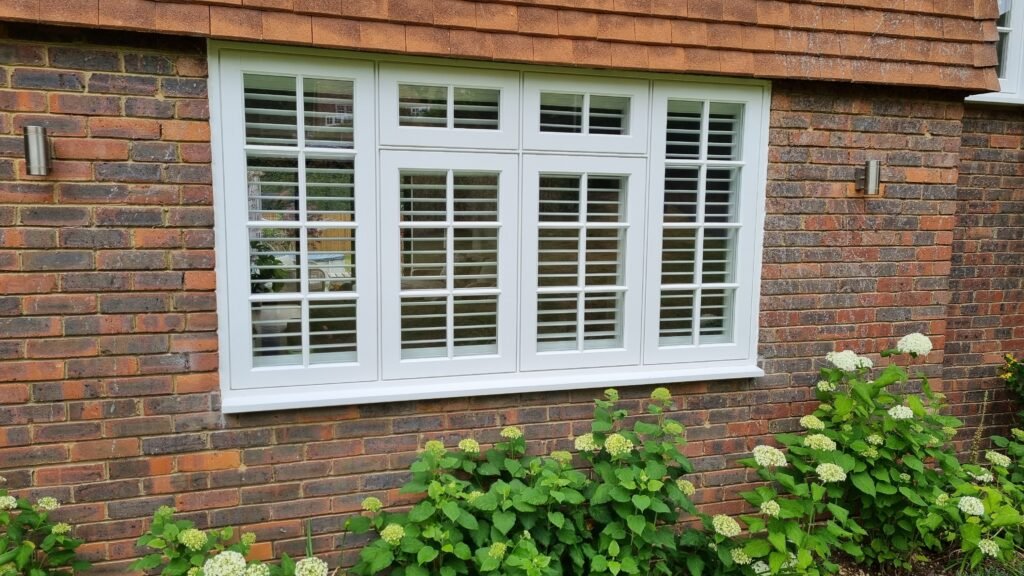
After fifteen years in this industry, I’ve supplied casement windows for medieval manor houses, Georgian rectories, Victorian terraces, Edwardian semis, 1930s bungalows, post-war council houses, and contemporary new-builds. No other window style covers such range. That adaptability isn’t accidental—it stems from the casement’s inherent flexibility.
Period Properties: Authentic Character
For listed buildings and conservation areas, timber casements are often the only acceptable option. Conservation officers generally require like-for-like replacement—if your historic property has casements, that’s what you’ll need to install. Fortunately, we can replicate virtually any period detail: specific glazing bar profiles, traditional ironmongery, authentic paint colours, precise pane configurations.
The key is understanding what makes each period’s casements distinctive. Georgian windows favour slim glazing bars and classical proportions. Victorian casements might feature horns, margin lights, or decorative toplights. Edwardian versions often incorporated Art Nouveau influences. Getting these details right transforms a replacement from “acceptable” to “invisible”—the highest compliment in conservation work.
Contemporary Architecture: Clean Lines
At the opposite end of the spectrum, casements work brilliantly in contemporary architecture. Strip away the glazing bars, use slim profiles, specify large glass panes, and you get a window that’s pure minimalism—all function and light, no ornamentation.
We completed a project last summer for a contemporary extension in Hackney—a dramatic glass-and-timber structure attached to a Victorian terrace. The architect specified full-height casements with no glazing bars, maximising the garden views. In charcoal grey paint against pale render, the windows became architectural features in themselves, framing the garden like artwork.
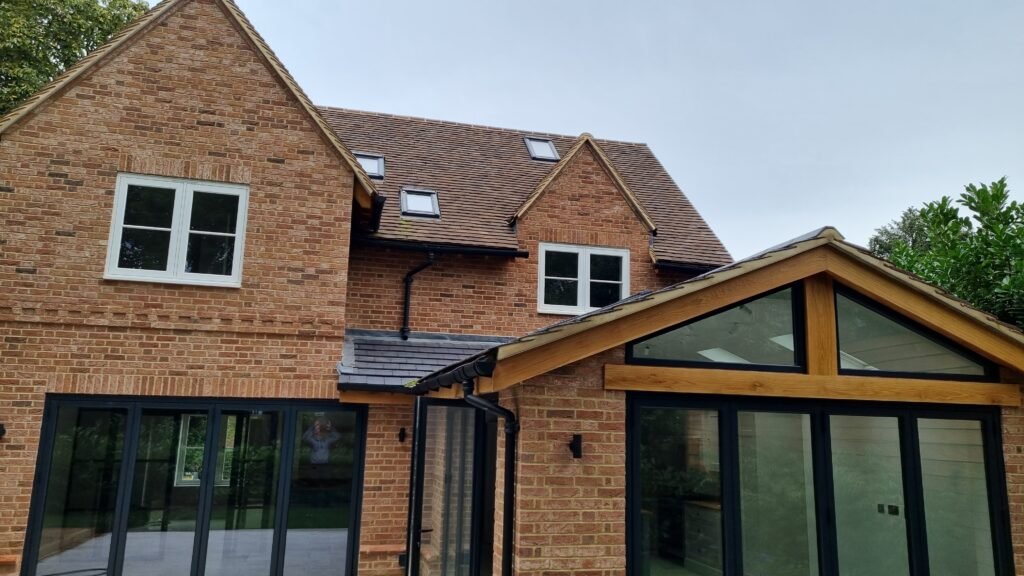
This adaptability makes casements the natural choice when you’re bridging periods—a contemporary extension on a period property, for instance. The casement format works in both contexts, creating visual continuity while allowing each section its own character.
Practical Excellence: Ventilation and Maintenance
Beyond aesthetics, casements offer practical advantages that explain their enduring popularity. The wide-opening arrangement provides maximum ventilation—the entire sash aperture becomes an airflow channel, far more effective than the partial opening of a sliding sash or tilt-and-turn window.
For kitchens, bathrooms, and utility rooms—anywhere moisture and odours need clearing—casements are the practical choice. Open them fully and air circulates freely; close them and you have a completely sealed unit. That binary simplicity is part of their appeal.
Maintenance is straightforward too. Casements have fewer moving parts than sliding sashes—no cords, weights, or pulleys to fail. The hinges and locking mechanisms are accessible for adjustment and lubrication. When repainting is needed, the sash opens wide for easy access to all surfaces. For homeowners who value simplicity, casements deliver.
Conclusion: Five Centuries of Proven Performance
The casement window has survived five hundred years of architectural fashion, technological change, and shifting tastes. It has been refined, improved, and adapted—but never superseded. That longevity tells us something important: this is an approach that works.
From medieval lead-lighted casements in oak frames to today’s high-performance engineered timber units with multi-point locking and low-E glazing, the underlying principle hasn’t changed: a hinged sash that opens outward, simple to operate, secure when closed, providing light and ventilation as needed. The technology has transformed; the essence endures.
For UK homeowners choosing new windows, timber casements offer something rare: a window style that suits virtually any property type, any architectural period, any aesthetic preference. Whether you’re restoring a Tudor cottage or fitting out a contemporary extension, casements provide the perfect blend of historical authenticity and current performance standards.
That’s the beauty of proven solutions. They just work.
Frequently Asked Questions
FAQ
What’s the difference between a casement window and a sash window?
–
+
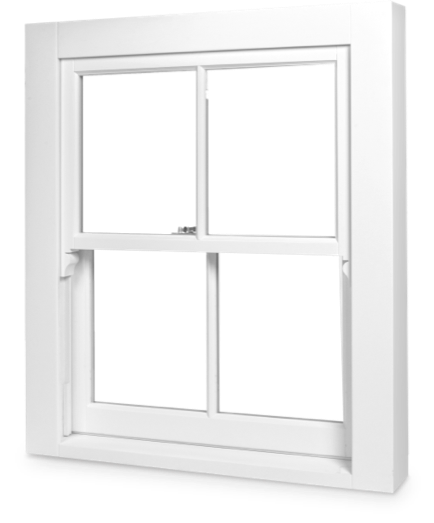
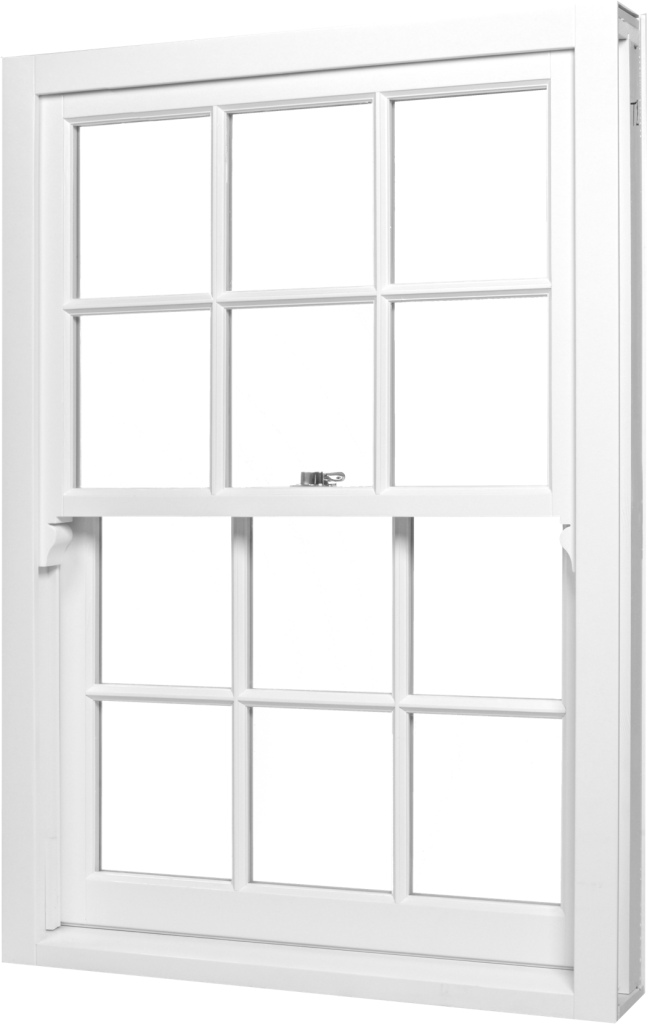
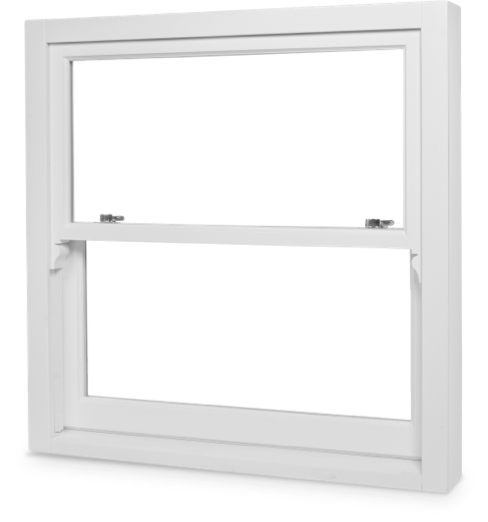
Casement windows are hinged at the side (or sometimes top) and swing outward like a door. Sash windows slide vertically within the frame, with the upper and lower sashes moving past each other. Casements typically provide better ventilation and airtightness, while sash windows are the traditional choice for Georgian and Victorian townhouses.
Are casement windows secure?
–
+
Modern timber casements with multi-point locking systems are extremely secure—many achieve PAS 24 certification, the standard required by insurers and Building Regulations. The locking mechanism engages bolts at multiple points around the frame perimeter, making forced entry very difficult. Traditional single-latch casements can also be upgraded with improved security hardware.
What’s a French casement window?
–
+
A French casement features two sashes meeting in the centre with no fixed mullion between them—a configuration sometimes called a floating mullion. When both sashes open, you get a completely unobstructed opening—ideal for garden access, balconies, or maximising views. When floor-length, they’re often called French doors or French windows. The style originated in 17th-century France and became popular in English Georgian and Regency architecture.
Can I get casement windows for a listed building?
–
+
Yes—in fact, timber casements are often the only acceptable option for listed buildings and conservation areas. The key is matching the original specification: correct glazing bar profiles, appropriate mouldings, authentic hardware, and accurate proportions. A specialist manufacturer can replicate virtually any period detail, and working with your conservation officer early in the process helps ensure approval.
What is a flush casement window?
–
+
A flush casement has the sash sitting flush with the outer frame when closed, creating a smooth, uninterrupted exterior surface. This differs from stormproof casements, where the sash overlaps the frame. Flush casements became popular in Arts and Crafts architecture and are prized for their clean, honest aesthetic. They’re equally suited to period restoration and contemporary projects.
How energy efficient are timber casement windows?
–
+
Very efficient. Double-glazed timber casements typically achieve U-values of 1.2-1.4 W/m²K, meeting or exceeding Building Regulations requirements. Triple glazing can achieve below 1.0 W/m²K. The compression seal around the sash perimeter creates excellent airtightness, and timber’s natural insulating properties mean the frames stay warm without thermal breaks.
Ready to Explore Casement Windows for Your Home?
At Wooden Windows Online, we manufacture bespoke timber casement windows for every application—from historically accurate reproductions for listed buildings to sleek contemporary styles for new extensions. Every window is made to measure in our workshop, using FSC-certified sustainable timber and factory-applied microporous finishes.
Whether you need traditional flush casements for a Victorian property, French casements for garden access, or minimalist profiles for a contemporary project, we can help. Our team understands period detailing, conservation requirements, and current performance standards—we’ll guide you to the right specification for your property.
Request your free consultation today. Contact us to discuss your casement window project and discover why thousands of UK homeowners trust us with their timber windows.
Our Best-Selling Timber Windows: