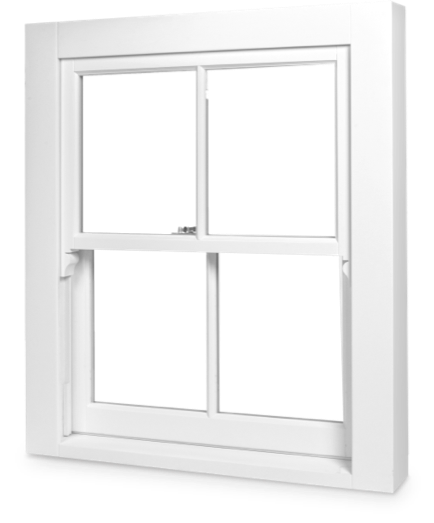
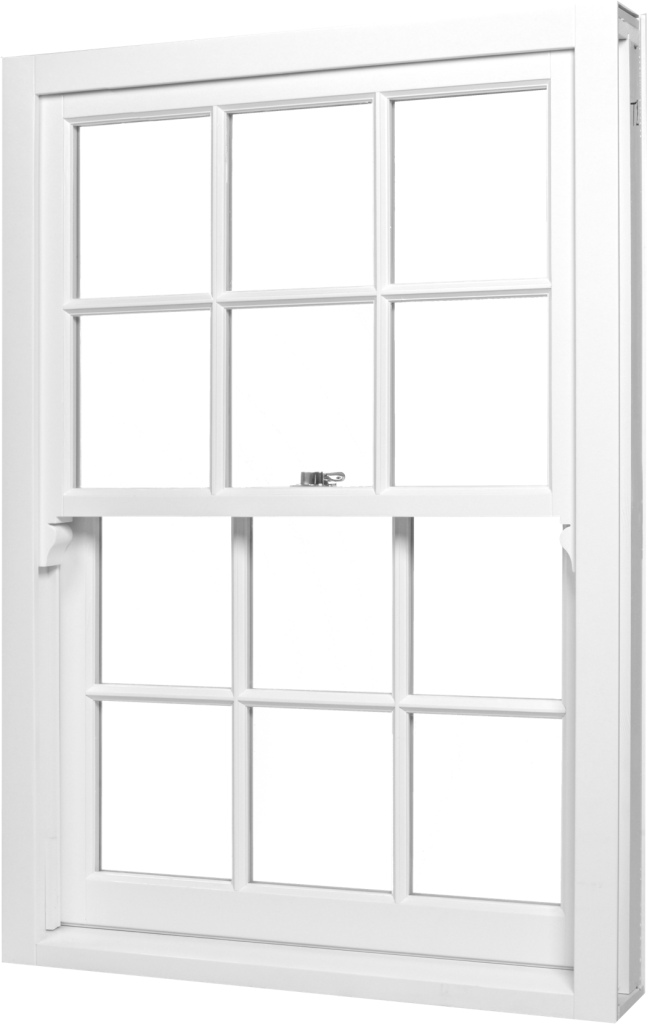
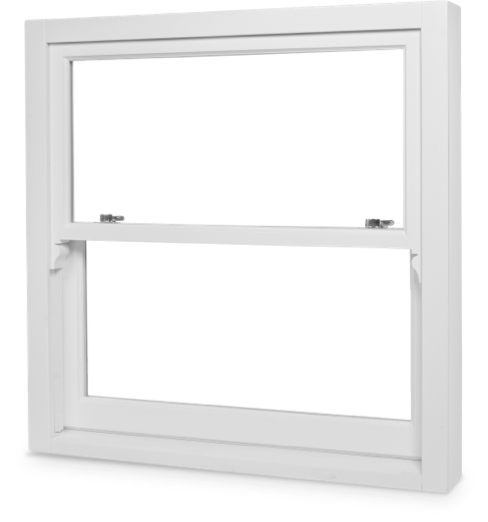
Weather-Resistant Timber Windows
How Timber Windows Are Treated for Weather Resistance
–
+
Start with the raw material. We use three-layer laminated sections — engineered pine, meranti, or oak — where each layer has its grain running perpendicular to the next. Why does that matter? Because wood moves. It swells when wet, shrinks when dry, mostly across the grain. In a solid section, that movement is one-directional and cumulative. Joints open. Frames rack. Your sashes start sticking by October and won’t close properly again until the following July.
Cross-lamination cancels that out. Movement in one layer is restrained by the adjacent layer. The whole profile stays dimensionally stable to within fractions of a millimetre. We’ve been building this way since 2013, and the difference versus solid timber — well, it’s not subtle. It’s the difference between a window that works properly for 30 years and one that starts giving you trouble after 5.
Vacuum Impregnation: Deep Preservation, Not a Surface Dip
Before we machine anything, the raw laminated blanks go into a vacuum chamber. Air gets extracted, then preservative — usually a copper-based formulation — is forced into the wood under pressure. This isn’t a dip. It’s not a brush-on. The preservative penetrates several millimetres into the grain, bonding with the cell structure.
Why does this matter? Because every surface treatment in the world will eventually get breached. A stone chip, a scratch from a ladder, a spot where the painter missed. With a surface-only treatment, that’s your entry point for moisture and fungal spores. With vacuum impregnation, the wood underneath that breach is already protected. The fungus has nothing to eat.
Quick aside: some suppliers advertise “pressure treated” timber and leave it at that. Ask them what chemical, what retention level, what penetration depth. If they can’t tell you, it’s probably a quick dip tank rather than genuine vacuum/pressure treatment. The difference in long-term protection is enormous.
Microporous Coatings: Why They Outperform Standard Paint
After machining and assembly, every frame gets a multi-coat finish system. We use microporous coatings — and this is one of those technical details that actually matters to how your windows hold up.
Conventional gloss paint — the stuff most people think of as “exterior paint” — forms a continuous film over the surface. Basically a plastic skin. Works brilliantly for about three years. Then moisture finds its way underneath through a crack, a joint, anywhere the film has broken. And once it’s under there, it’s trapped. The paint blisters. Peels. You’re back to bare wood and reaching for the scraper.
Microporous finishes work on a completely different principle. The coating bonds with the wood fibre rather than sitting on top. The structure is porous at a molecular level — water vapour can pass through in both directions, but liquid water can’t. So rain hits the surface and beads off. But any moisture that does get into the timber from the back face, or from condensation, can escape outward without pushing the finish off. The wood breathes.
We factory-apply these in controlled conditions — temperature-regulated, low-humidity spray booths, not a bloke with a brush in a draughty workshop. Each coat gets proper flash-off time before the next goes on. Four-stage system: preservative base, stain coat, intermediate, topcoat. UV stabilisers in the top layers slow down photodegradation. The result is a finish that lasts significantly longer between maintenance cycles than conventional paint, and when it does need refreshing, you just lightly sand and recoat. No stripping.
.
Do Wooden Windows Rot? What UK Weather Does to Timber Frames
–
+
Let’s get specific, because “bad weather” covers a lot of ground.
UV radiation. South-facing frames cop the worst of it. UV breaks down both the wood surface and the coating, causing greying and chalking. This is why pigmented finishes outperform clear ones by a wide margin — the pigment particles physically block UV penetration. If you’re specifying a clear stain for aesthetic reasons, expect to recoat every 2–3 years on sun-exposed elevations. Pigmented finishes? More like 5–8 years. That’s a real-world difference we see consistently, not a lab test number.
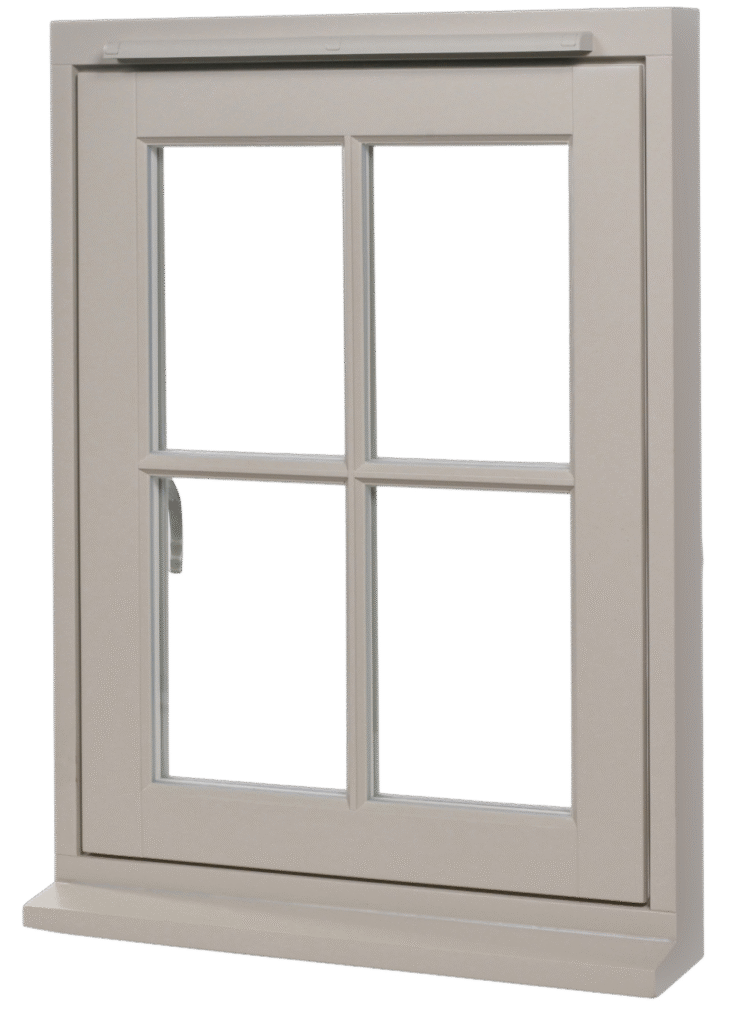
Driving rain. Horizontal surfaces catch it worst: sill tops, bottom rails, meeting rails on sash windows. These are the areas where water sits rather than running off. Our sill profiles incorporate a drip groove on the underside and a slope on the top face to shed water. Sounds basic, but you’d be surprised how many cheap imports come with flat sills. Water just pools there.
Frost-thaw. This kills rigid finishes. Water gets into a hairline crack, freezes, expands, widens the crack. Next thaw, more water gets in. By spring you’ve got paint lifting in sheets. Microporous coatings handle this far better because they’re flexible — they move with the wood rather than cracking against it.
And then there’s the one people forget: condensation. North-facing windows in bedrooms are the classic problem spot. Moisture from breathing and showering condenses on the cold glass and runs down onto the frame. Night after night, all winter. If the sill joint isn’t properly sealed and the finish isn’t intact, that’s your rot risk right there. Not driving rain. Not storms. Just ordinary condensation. double glazed wooden windows with low-E glass and warm-edge spacers help enormously here because the inner pane stays warmer, reducing condensation.
Best Timber Species for Exposed Windows: Pine, Meranti, or Oak?
–
+
Not every window on your house faces the same conditions. So why would you specify the same timber for all of them?
Engineered pine is our biggest seller and it handles sheltered-to-moderate exposure perfectly well. Under eaves, on protected elevations, anywhere the frame doesn’t get hammered by direct weather for hours at a time. It takes paint beautifully and — here’s the thing — painted pine looks identical to painted oak or painted meranti. If you’re painting everything white anyway, there’s no visual argument for spending more on the timber. timber windows prices
Meranti — Dark Red Meranti specifically — is where we steer customers who have exposed positions. West-facing elevations in the wetter half of the country. Ground-floor frames close to flower beds where splashback is an issue. Coastal properties where salt spray is a factor. The wood is denser, more naturally oily, and significantly more resistant to moisture uptake than pine. Costs about 20–30% more. hardwood windows
Oak windows is the nuclear option. Dense as anything, packed with natural tannins that are actively antifungal, and dimensionally stable in ways that make other species look fidgety. If you’re building for the century, or if you need to satisfy a conservation officer who insists on historically authentic materials, oak is the answer. But it’s roughly three times the material cost of pine. For most houses, mixing species — oak or meranti on exposed elevations, pine everywhere else — gives you the best balance.
Timber Window Maintenance: How Often and What’s Involved
–
+
We’re not going to tell you timber windows are maintenance-free. They’re not. Neither is uPVC, by the way, despite what the salesmen claim — it chalks, discolours, and the mechanisms seize up. At least timber can be repaired. Try repairing a cracked uPVC profile.
Factory-finished engineered timber frames need an inspection every couple of years. What you’re looking for: any spots where the finish has worn thin or been damaged. Typically that’s horizontal surfaces — sill tops and bottom rails. A quick sand with 240-grit and one coat of a compatible microporous finish. Sikkens, Osmo, Teknos HQ — any of these work well. An hour per window if you’re being thorough. Most people knock out the whole house in a weekend.
If you absolutely want to minimise maintenance, go meranti or oak with a natural oil finish like Osmo UV Protection Oil. You’ll get that silvery weathered look over time — which is cosmetic, not structural — and you can just re-oil whenever you feel like it. Some of our oak window customers haven’t touched their frames in 8 years and the timber underneath is perfectly sound.
Get a Quote for Weather-Resistant Timber Windows
–
+
We build all our windows from engineered laminated timber with full vacuum treatment and factory-applied microporous finish. Pine, meranti, or oak — your choice. Double or triple glazed. Delivered ready for your builder to fit, with a 5-year product warranty.
Send us your sizes for a quote within 48 hours. If you’re not sure what species to specify for your particular situation, call us on 0800 994 9055 — we’ll give you a straight recommendation, not a sales pitch. energy-efficient timber windows
Our Best-Selling Timber Windows: