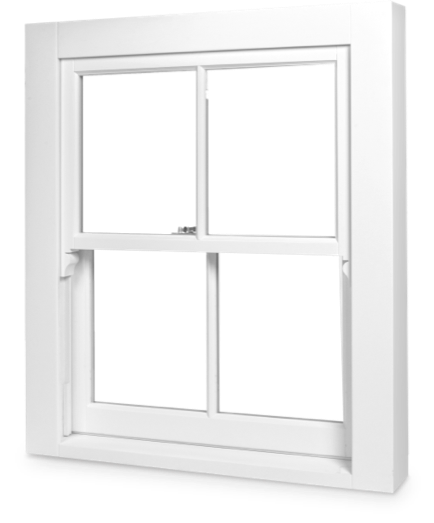
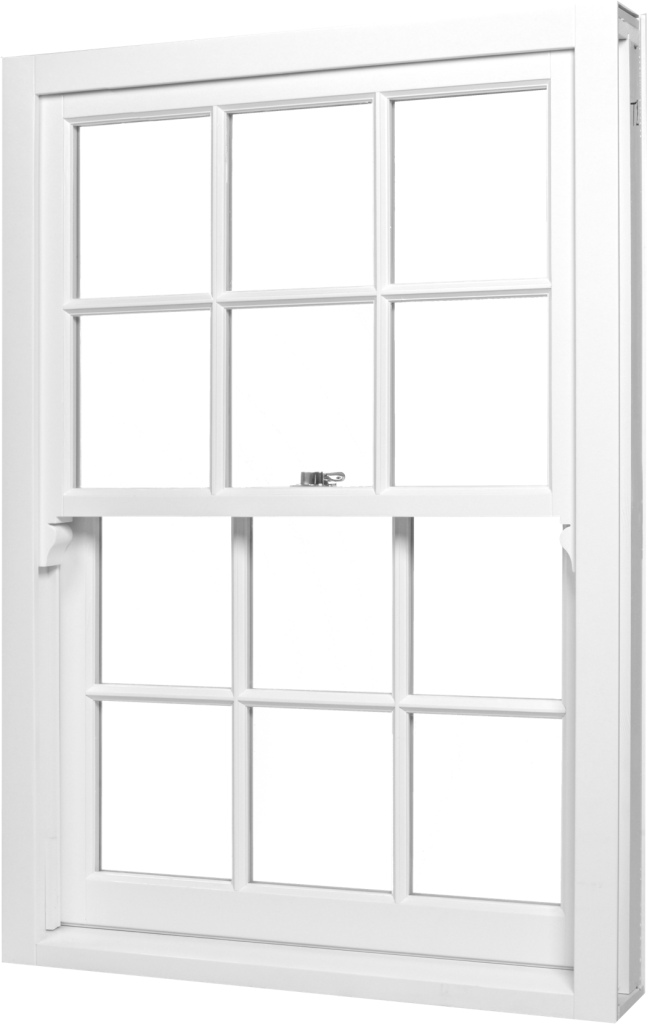
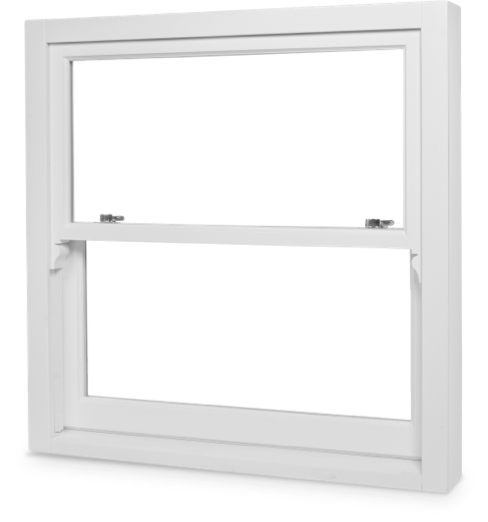
Energy Efficient Timber Windows
Timber Window U-Values Explained in Plain English
–
+
U-value measures how fast heat passes through a building element. Units: watts per square metre per degree of temperature difference (W/m²K). Lower is better. An uninsulated solid brick wall: about 2.0. A well-insulated cavity wall: 0.25–0.30. Windows sit somewhere in between, and they’re usually the weakest thermal link in the building envelope by a long way.
Building Regulations Part L (England) currently requires replacement windows to achieve a whole-window U-value of 1.4 W/m²K or better. Our standard double-glazed timber windows meet this. With enhanced specifications, we’re well below it.
What Affects Energy Efficiency: Glazing, Gas Fill, Spacers, and Coatings
–
+
Let’s build a window spec from basic to high-performance, one upgrade at a time:
Bare minimum — double glazing, air-filled, no coating: centre-pane U-value around 2.7 W/m²K. This is what you’d get in the cheapest possible sealed unit. Barely legal for new installations.
Add argon gas fill: drops to about 1.4 W/m²K. Argon is 34% less thermally conductive than air. Costs almost nothing. There is no rational argument for air-filled units in 2026.
Add low-E coating (soft-coat silver on surface 3): drops to roughly 1.1–1.2 W/m²K. The coating reflects long-wave infrared back into the room while allowing light through. This is the single biggest performance jump for the money. double glazed wooden windows
Add warm-edge spacer bar: knocks off another 0.1–0.2 from the whole-window value by reducing the thermal bridge at the glass edge.
Go to triple glazing (three panes, two argon cavities, low-E on surfaces 2 and 5): 0.8–1.0 W/m²K. Best available, but 50% heavier and 25–35% more expensive.
Note: these are centre-pane values. The whole-window U-value (which is what Part L cares about) includes the frame and the glass edge, so it’ll be slightly higher. Timber frames contribute less thermal bridging than aluminium or steel, so the penalty is smaller.
Timber vs uPVC vs Aluminium: Which Frame Is Most Energy Efficient?
–
+
This is where the physics works in your favour. Here are typical frame U-values:
Timber: 1.2–1.5 W/m²K. The wood itself insulates.
uPVC: 1.3–1.5 W/m²K. Multiple air chambers in the profile provide insulation. Similar to timber, despite being a plastic.
Aluminium with thermal break: 2.5–4.0 W/m²K. Even with an insulating strip between the inner and outer profiles, aluminium bleeds heat. It’s the worst-performing common frame material by a significant margin.
What this means practically: for the same glazing unit, a timber window will match or beat uPVC and significantly outperform aluminium. The frame is a small percentage of the total window area, but it’s the part with the highest U-value, so its contribution to heat loss is disproportionately large.
How Much Can Energy Efficient Timber Windows Save on Heating Bills?
–
+
We get asked this constantly, and the honest answer is: it depends. On your heating system, your other insulation, your thermostat habits, local energy prices. But here are realistic ranges based on typical UK scenarios.
Replacing single glazing with our standard double-glazed timber windows: expect to reduce heat loss through those openings by 50–65%. For a typical 3-bed semi with maybe 12–15m² of window area, that’s roughly £150–250 per year off your heating bill at current gas prices. Pays for the glazing upgrade alone within 5–8 years.
Upgrading from 1990s/early-2000s double glazing to current spec: more modest, maybe £80–150 per year. Old sealed units often have failed seals (you can tell — condensation between the panes), no low-E coating, air rather than argon fill. They’re not performing anywhere near their original spec.
The other factor people forget: comfort. Cold windows create downdrafts — warm room air hits cold glass, cools, drops, and creates a chill near the window that your heating system fights against endlessly. Better-insulated windows eliminate this. The room feels warmer even at the same thermostat setting, which often means people turn the heating down a degree or two without noticing. That saves more than the numbers suggest.
When Triple Glazing Makes Sense (and When It Doesn’t)
–
+
Triple glazing saves more heat per window, obviously. But it costs 25–35% more per unit and weighs roughly 50% more (which matters for sash window balance calculations and for the structural load on your walls).
Our honest recommendation: for standard UK retrofit projects, double glazing with low-E glass and argon is the sweet spot. The jump from basic double to enhanced double is enormous. The jump from enhanced double to triple is incremental. If you’ve got £500 per window to spend beyond the basic spec, you’re better off putting it into better glazing on double units (low-E + argon + warm edge) than into triple glazing with basic glass.
Triple earns its keep in: Passivhaus or near-Passivhaus new builds, very exposed highland/coastal locations, north-facing bedroom walls where condensation is persistent, or properties that have already maximised insulation everywhere else and windows are the last weak point. weather-resistant timber windows
Building Regulations Part L: Do Timber Windows Comply?
–
+
All our windows can be specified to meet or exceed Part L requirements (1.4 W/m²K whole-window). We provide U-value calculations and Window Energy Ratings where needed for Building Control sign-off. For listed building windows projects where Part L exemptions may apply, we’ll work with your conservation officer on an appropriate specification.
softwood windows and hardwood windows achieve the same glazing U-values — the timber species doesn’t meaningfully affect thermal performance when painted. The difference between species is durability and maintenance, not insulation.
Energy Efficient Timber Window Prices
–
+
Tell us your window sizes and we’ll quote for the spec that makes sense — standard, enhanced, or triple. Full pricing: timber windows prices. All windows made to your measurements, factory finished, delivered ready for your builder. 0800 994 9055.
Our Best-Selling Timber Windows: