Double Glazed Wooden Windows
What’s Inside a Double Glazed Timber Window Unit
–
+
Standard spec: two panes of 4mm float glass separated by a 16mm cavity. Total unit thickness: 24mm. The cavity is filled with argon gas — which is denser than air and conducts about 34% less heat. Argon is colourless, odourless, inert. It doesn’t degrade, doesn’t react with anything, doesn’t leak out unless the edge seal fails. It’s also dirt cheap, which is why there’s no reason to accept air-filled units in 2026.
The two panes are held apart by a spacer bar around the perimeter. We use warm-edge composite spacers — not aluminium. This is one of those details that seems trivial but has a measurable impact. An aluminium spacer bar creates a thermal bridge right at the edge of the glass where it meets the frame. In cold weather, that bridge chills the inner glass edge enough for condensation to form in a ring around the perimeter. You’ve probably seen this on older double glazing — the misty halo around the edges on a cold morning. Warm-edge spacers largely eliminate that problem. They also improve the overall window U-value by 0.1–0.2 W/m²K, which doesn’t sound like much until you multiply it across 12 windows.
Low-E Glass for Timber Windows: The Best Value Upgrade
–
+
Low-emissivity glass has a microscopically thin metallic coating — usually silver or tin oxide, applied to surface 3 (that’s the inner face of the outer pane, facing the cavity). What this coating does is reflect long-wave infrared radiation — heat from your radiators, your body, your furniture — back into the room, while still allowing visible light and short-wave solar energy through.
Think of it as a one-way mirror for heat. You can’t see the coating. Light transmission is barely affected. But the difference in thermal performance is dramatic.
Numbers: a standard double glazed unit with argon and plain glass gives you a centre-pane U-value of about 1.4 W/m²K. Add low-E coating and that drops to roughly 1.1 W/m²K. That’s a 20% improvement in insulation performance for a relatively modest cost increase per window. When we say “best bang for your buck,” this is what we mean. energy-efficient timber windows
Noise Reduction with Double Glazed Wooden Windows
–
+
People assume double glazing is primarily for keeping heat in. Fair enough. But if you live near a road, a railway, or under a flight path, the acoustic benefit might matter more to you day-to-day.
A standard 4/16/4 double glazed unit reduces external noise by about 29–31 dB. For context: a reduction of 10 dB sounds roughly half as loud to the human ear. So 30 dB is a significant drop. It takes a busy road from “conversation-disrupting” to “background hum.” Enough for most situations.
For serious noise problems, we offer acoustic laminated glass. This uses a PVB (polyvinyl butyral) interlayer bonded between two glass panes, which damps vibration far more effectively than an air gap. A typical acoustic configuration — 6.4mm laminated outer, 16mm cavity, 4mm inner — achieves 35–38 dB reduction. That’s the difference between hearing every lorry and barely noticing the road exists. Worth every penny if noise is affecting your sleep or your sanity.
One thing to know: asymmetric glass thickness helps too. Having different thicknesses on the inner and outer panes (say 6mm outer, 4mm inner) means they resonate at different frequencies, so less sound energy passes through. We can spec this on any window. It adds barely anything to the cost but does genuinely improve acoustic performance versus matched 4/4 panes
Double Glazed Sash Windows
–
+
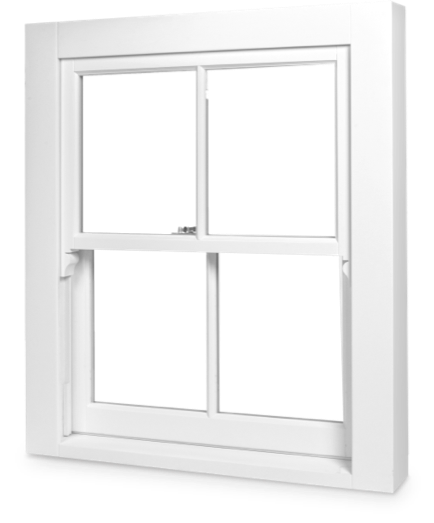
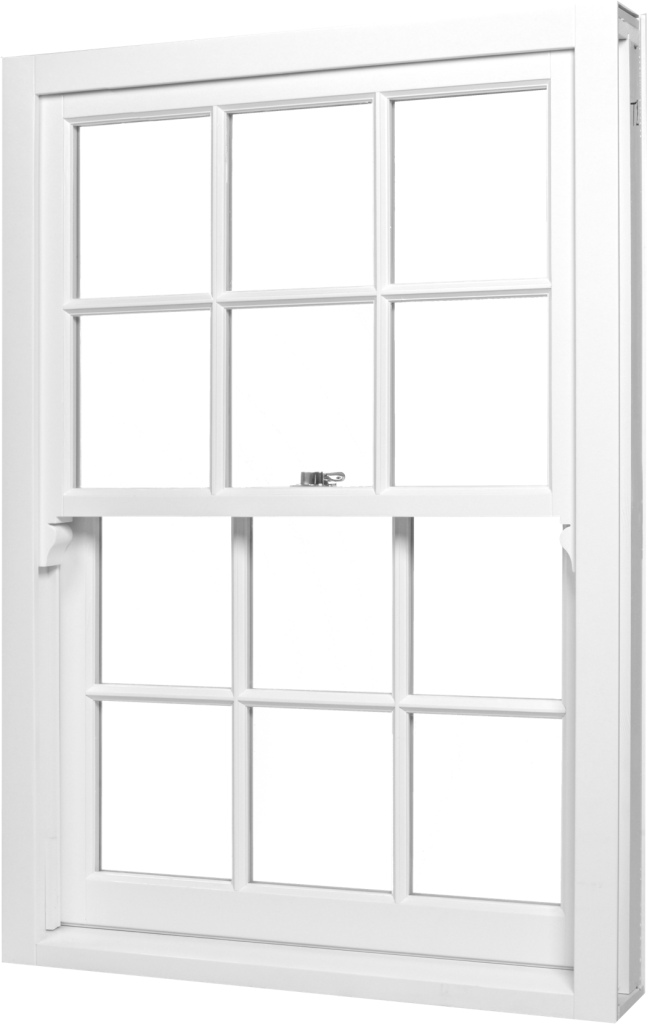
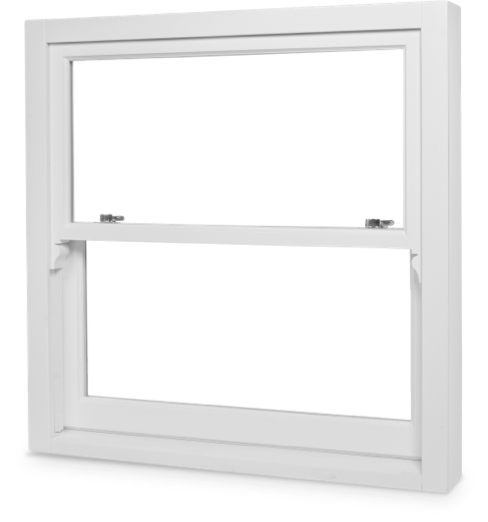
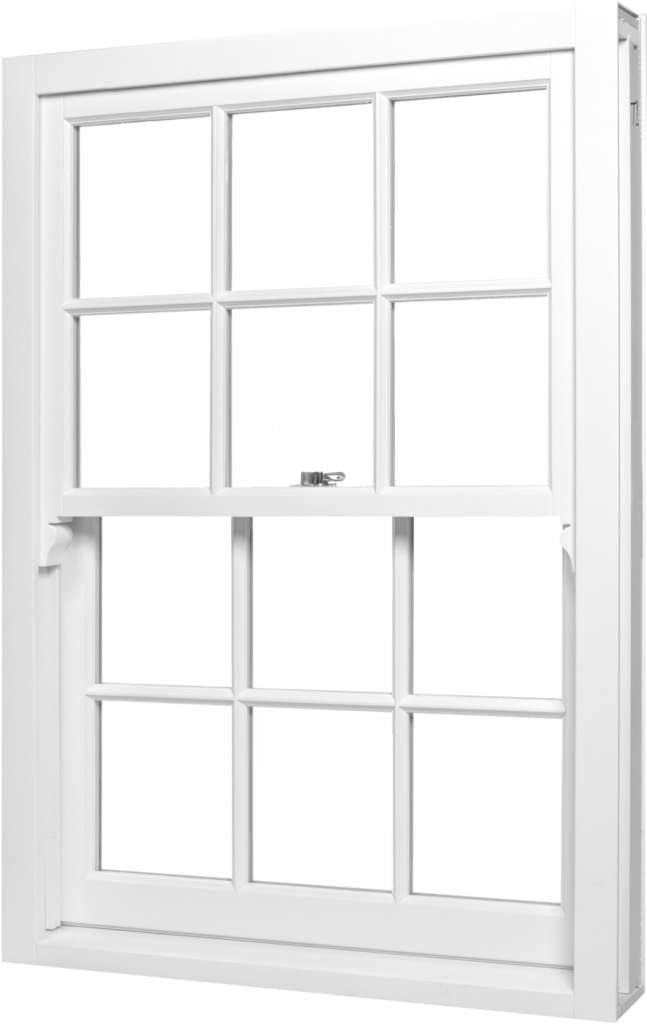
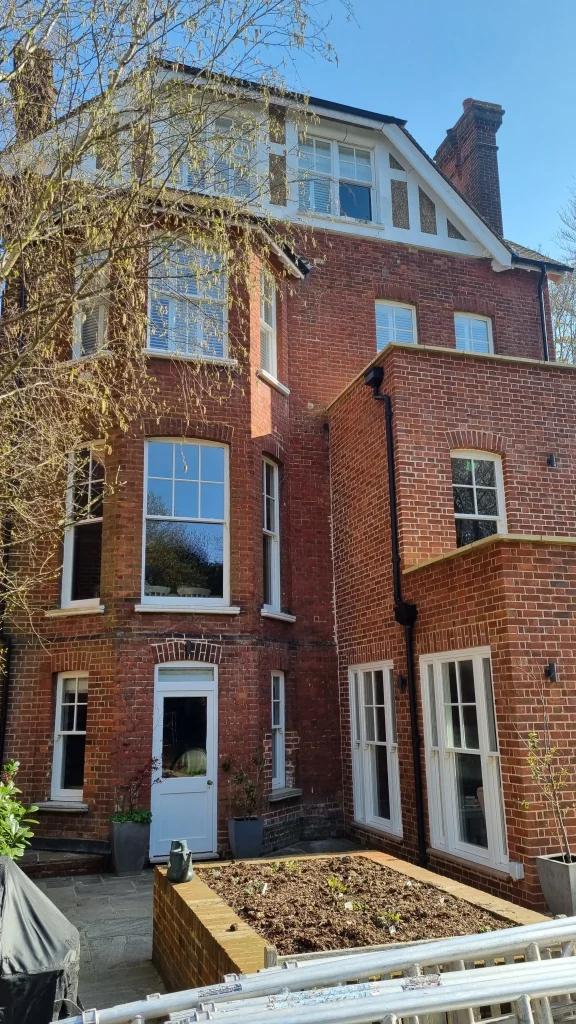
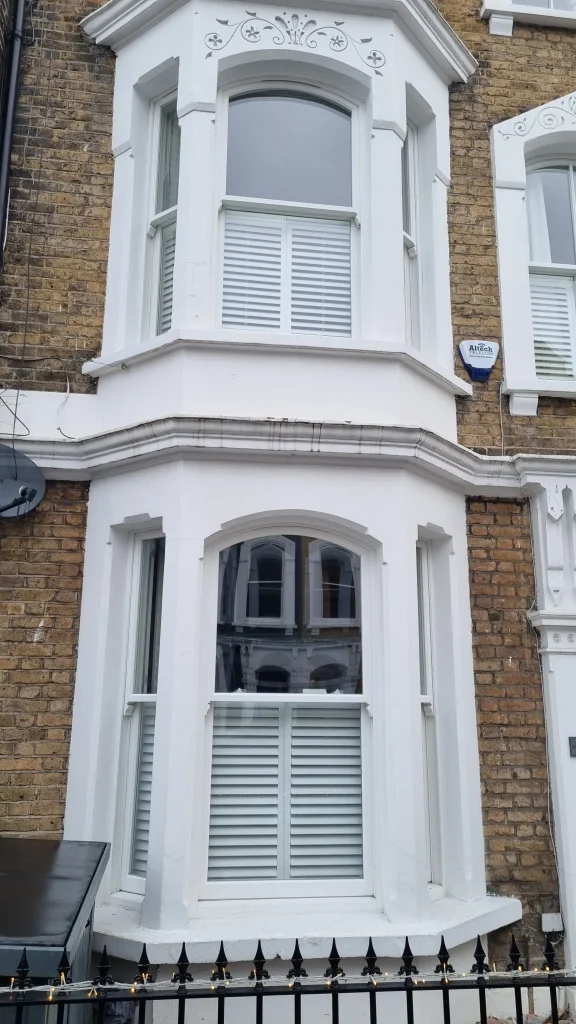
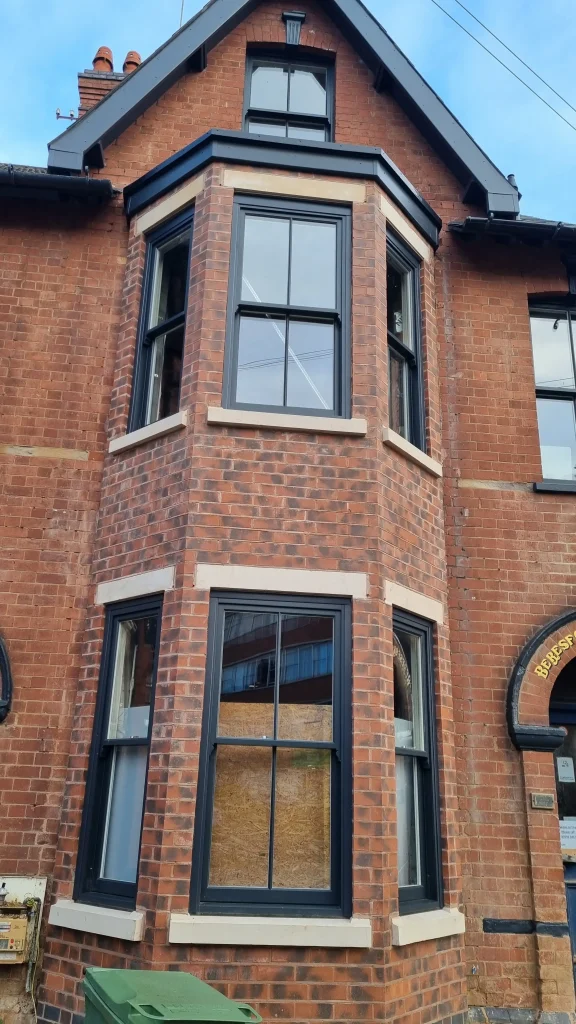
Sash windows and double glazing have a complicated history. The added weight of a sealed unit changes the balance of the sash — heavier glass needs heavier counterweights, or the sashes won’t stay open. Get this wrong and you’ve got windows that slam shut every time you let go, or that you have to physically hold up while trying to get some air. We’ve heard from customers who went to other suppliers and ended up with exactly this problem.
Our sash windows on weights are individually balanced. Every sash gets weighed after glazing, and the lead counterweights are calculated for that specific sash. Not a standard weight. Not an approximation. Exactly matched. The sash should stay put wherever you leave it — fully open, half open, cracked for ventilation. If it doesn’t, the balance is wrong.
For spring-balance sash windows, the same principle applies — spiral balances need to be specified for the exact sash weight. We handle this at the manufacturing stage so your installer isn’t fiddling with adjustment screws on site.
Double Glazed Casement Windows: Flush Fit Design
–
+
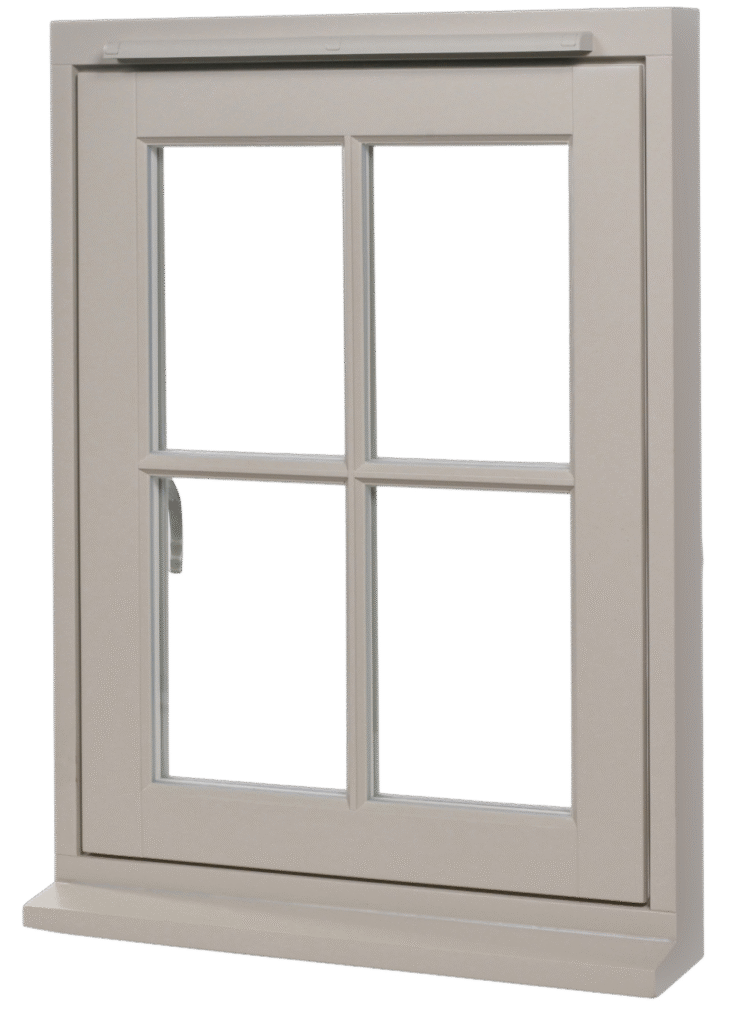
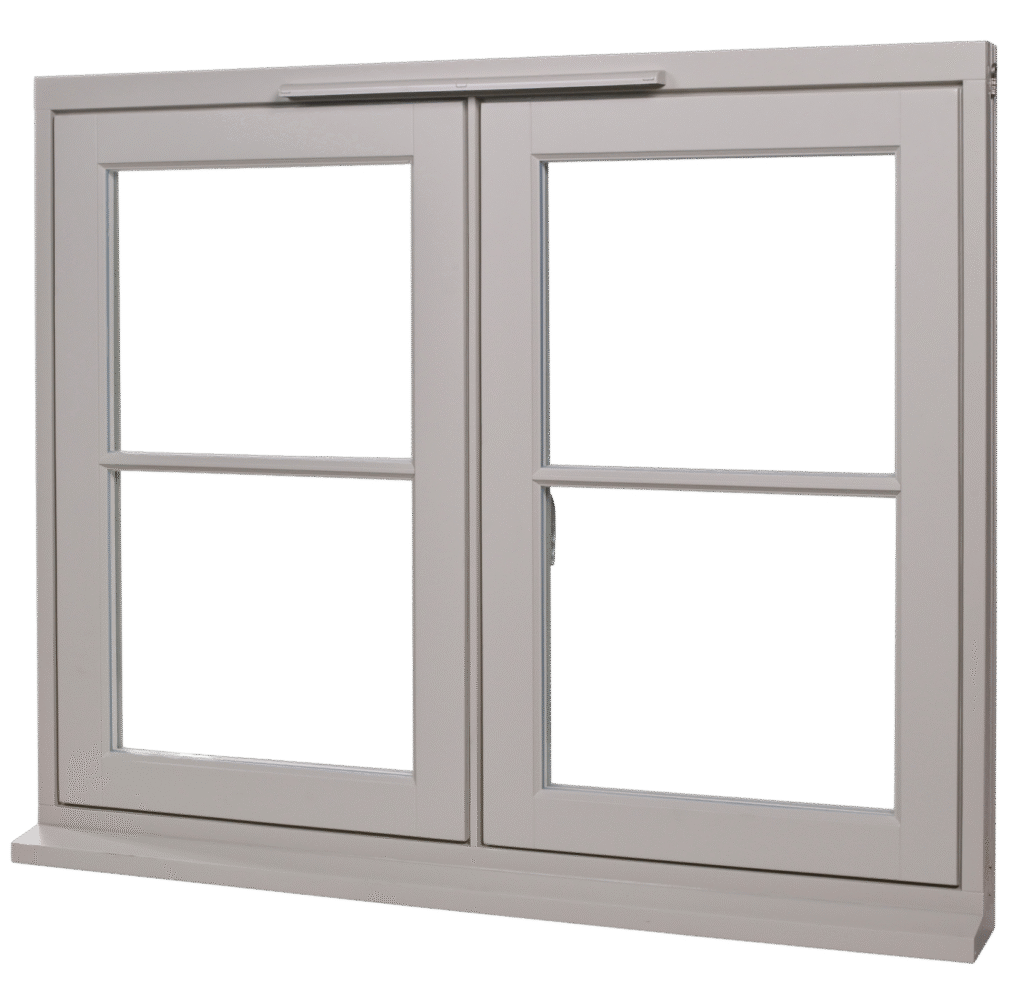
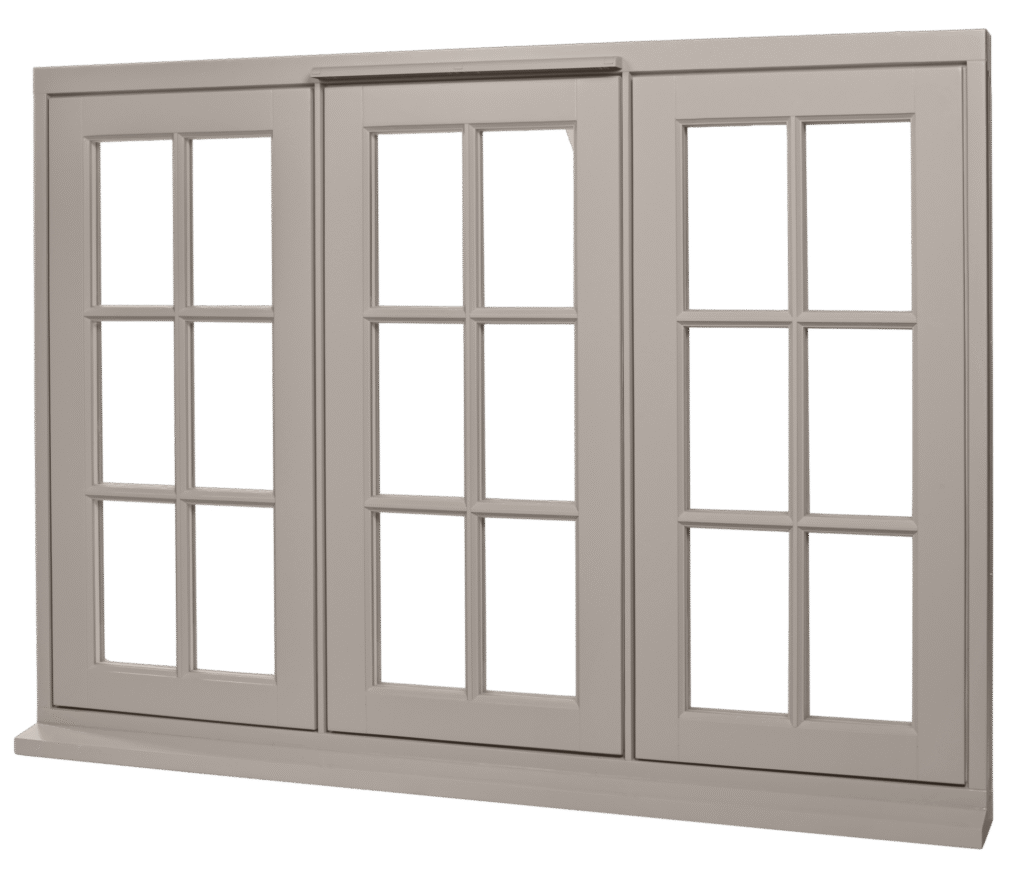
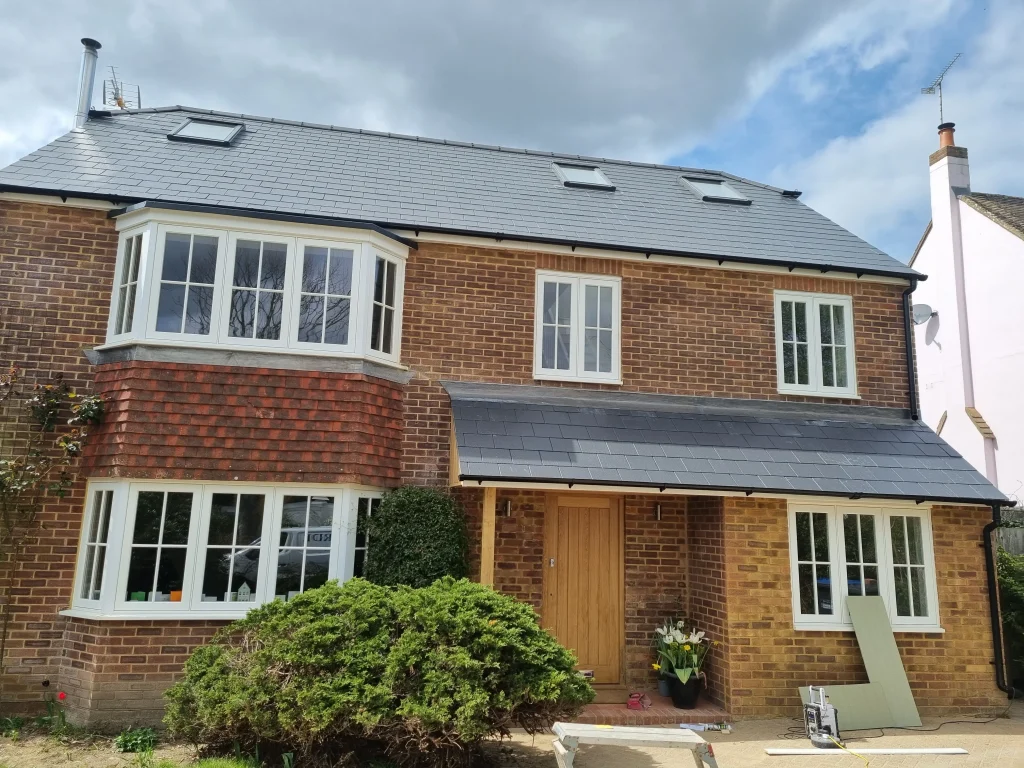
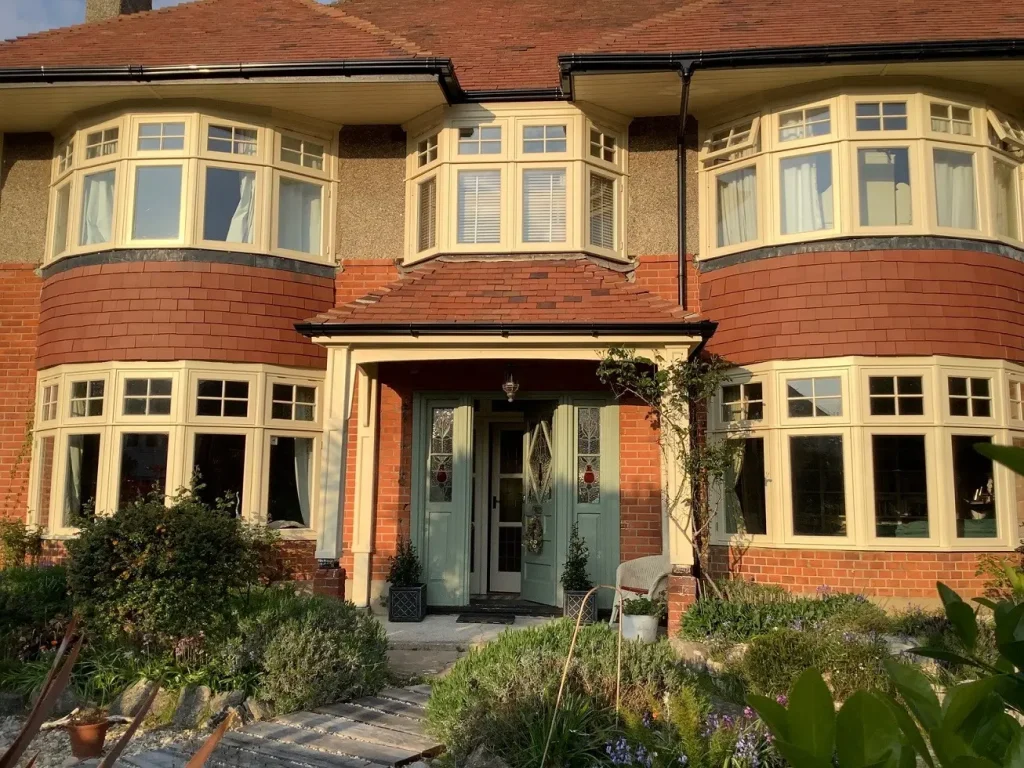
Casements are more forgiving. No counterbalance to worry about — the sash just hinges open. Our flush casement range takes a standard 24mm sealed unit without any profile compromise. The sash sits flush with the outer frame face when closed, giving that clean traditional line that works on everything from a 1930s semi to a barn conversion. softwood windows
Side-hung, top-hung, or a combination with a fixed lower panel and opening top light — all accept the same glazing. For Georgian windows patterns, we can either divide the unit with solid through-bars (each small pane separately sealed) or use applied bars over a single unit. Different look, different cost, different thermal performance. Worth understanding before you order.
Double vs Triple Glazing for Timber Windows: Which Is Worth It?
–
+
Triple glazing adds a third pane and a second argon cavity. U-values drop to around 0.8–1.0 W/m²K. The trade-off: about 50% more weight (which affects sash balance calculations significantly) and 25–35% more cost per window.
Our honest take: for most UK retrofit projects, well-specified double glazing with low-E glass and argon is the sweet spot. Triple glazing earns its keep in new builds designed to Passivhaus or near-Passivhaus standards, or in genuinely extreme locations — exposed highland sites, north-facing bedroom walls in Scotland. If your house has solid walls with no insulation, spending the triple-glazing premium on wall insulation instead will save you more heat per pound spent. weather-resistant timber windows
Double Glazed Timber Window Prices
–
+
Double glazed timber casement windows start from £449+VAT in engineered pine. Sash windows from £649+VAT with traditional weights. Low-E glass upgrade, acoustic laminated options, and triple glazing quoted individually. Full breakdown on our timber windows prices page.
Supply only — we manufacture, finish, and deliver. Your builder fits them. No installation markup in our prices. Send us your sizes or call 0800 994 9055.
Our Best-Selling Timber Windows: