There’s a particular frustration that comes with owning a period property. You love the proportions, the grandeur, the craftsmanship that went into every detail — but those original sash windows rattle in winter, the paintwork is flaking, and your old windows let in cold, your energy bills tell a story your surveyor already warned you about.
Here’s the thing: most period sash windows are worth saving. Not just for heritage reasons, but because the wood in a well-made period window frame is often better quality than anything you’d source today. Old-growth softwood, slow-grown and dense, with a natural durability that modern plantation wood struggles to match.
We’ve been manufacturing and restoring sash windows for over a decade, and the question we hear most often is simple: repair or replace? The answer depends on what you’re actually dealing with. A rotten sash, a decayed sill, and frayed cords are very different problems from a structure that’s compromised beyond recovery.
This guide walks you through identifying what you have, understanding what’s worth preserving, and making decisions that balance beauty and functionality with modern performance expectations.
What You’ll Discover in This Article
- How to identify genuine period features and date your windows
- The key differences between period and Georgian glazing patterns
- When restoration makes more sense than window replacement — and when it doesn’t
- How slim-profile sealed units can upgrade thermal performance without altering appearance
- What draught-proofing options actually work on period sash windows
- How to find sash windows restoration specialists who understand heritage joinery
Identifying Period Sash Window Features
Sash Horns and Their Significance
The single most reliable way to date a sash window? Look at the sash horns — those small projections at the bottom of the upper frame where the stiles extend beyond the meeting rail.
Georgian sash windows don’t have them. They weren’t needed because Georgian glazing used smaller, lighter pieces held together by thick glazing bars. When manufacturers of the era started using larger sheets of glass — made possible by advances in glass production from the 1840s onwards — the meeting rail joint came under more stress. Sash horns were the engineering solution: additional material to strengthen that vulnerable corner.
If your windows have sash horns, they’re almost certainly post-1840. If they don’t, you’re likely looking at Georgian or very early period originals — and they’re worth particular care during restoration work.
Glazing Patterns That Tell a Story
Period window styles evolved significantly across the era. Early period sash windows (1840s-1860s) typically featured two-over-two or four-over-four configurations — still using glazing bars, but fewer and slimmer than their Georgian predecessors.
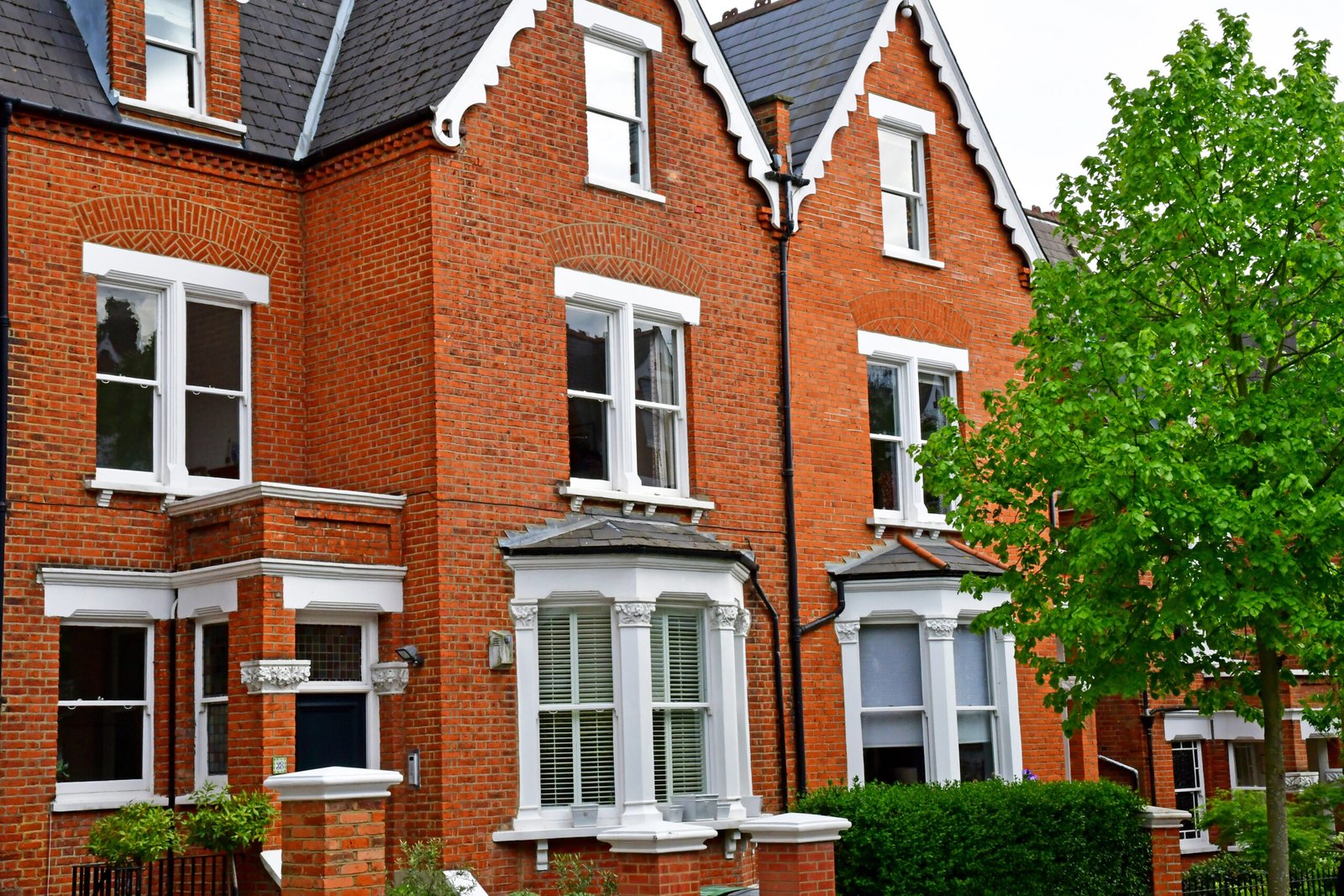
By the 1870s and 1880s, improvements in glass manufacturing allowed for single-sheet sashes. The classic “one-over-one” traditional sash windows layout — the period sash — one large sheet in each sash — became the dominant style. This is what most people picture when they think of period windows, and it’s the configuration you’ll find on the majority of surviving period terraces.
Late-era windows (1890s-1901) got more decorative. Coloured glass margins, Queen Anne revival details, and ornate glazing in the upper sash with a plain lower sash were all popular. If your upper sash has a decorative pattern while the lower is plain single-glazed, that’s a strong late-era indicator.
Proportions and Typical Sizes
These windows follow predictable proportions tied to the architecture. Ground-floor windows are typically taller — 1800mm or more — to create the imposing façade the era’s builders favoured. First-floor windows are slightly shorter, and top-floor windows shorter still, creating a visual hierarchy that gives these terraces their distinctive rhythm.
The width is usually consistent across floors: 900-1200mm for terraced houses, wider for semi-detached and detached properties. Bay windows — a defining hallmark period feature — often combine three sash windows in a curved or angled arrangement, requiring care and attention when any sash window refurbishment or restoration is planned.
Period Hardware and Ironmongery
Original Period hardware is another dating clue. Look for cast iron sash lifts (not pressed brass — that’s typically Edwardian), Brighton fasteners or Fitch catches on the meeting rail, and brass or iron pulleys in the frame. The pulley system itself should use traditional cords running over cast wheels, with counterbalance weights concealed in the box sash windows frame.
If your windows still have original ironmongery in working condition, that’s a significant heritage asset. Sash window repairs and replacement hardware should match the period — and good restoration specialists will source or commission historically appropriate fittings rather than fitting modern alternatives.
Victorian vs Georgian Sash Windows
Key Differences at a Glance
The most common mistake homeowners make is assuming all old sash windows are “Georgian.” They’re not, and the distinction matters — particularly for listed properties where planning officers expect accurate period identification.
Georgian sash windows (roughly 1714-1830) have no sash horns, use six-over-six or eight-over-eight glazing bar patterns, and feature thicker, more pronounced glazing bars (typically 20-25mm). The glass panels are smaller because large sheets simply weren’t available.
Victorian sash windows have sash horns, use fewer or no glazing bars, and feature larger panes. The overall proportions tend to be taller and narrower than Georgian equivalents. The frame profiles are generally slimmer because less internal structure was needed to support fewer glazing bars.
| Feature | Georgian (1714-1830) | Victorian (1840-1901) |
|---|---|---|
| Sash horns | None | Present |
| Glazing bars | Thick (20-25mm), 6/8-over-6/8 | Thin or none, 1-over-1 |
| Glass | Small panes, hand-blown | Large sheets, plate glass |
| Frame profile | Wide | Slimmer |
| Proportions | Squarer | Taller, narrower |
Dating Your Windows
Beyond visual clues, check the weights — cast iron suggests earlier manufacture, lead later. For properties in conservation areas, accurate dating directly affects what restoration approach you can take. A specialist surveyor can confirm the period if you’re unsure.
When Restoration Makes Sense
The decision between restoration and replacement comes down to structural integrity. If the timber is fundamentally sound — no extensive rot through the full section depth, no structural failure in the box frame — restoration is almost always the better choice. Both economically and for heritage preservation.
Draught-Proofing Period Windows
Modern draught-proofing systems for period sash windows are remarkably effective and entirely reversible. The process involves removing the existing parting and staff beads, fitting compression or brush seals, and reinstating the sashes with correct balance. Done properly, the windows open and close more smoothly than before because the seals also act as low-friction guides. As a bonus, they virtually eliminate that characteristic rattle that drives homeowners mad in wind.
Sash Cord Replacement and Rebalancing
If your sashes won’t stay open, drop unexpectedly, or require effort to move, the cords have probably stretched or broken. This is routine maintenance, not a sign of fundamental failure.
Replacement involves removing the sash, fishing new cord through the pulley, and reattaching it to the weight. Pre-stretched polyester cord lasts 30-40 years versus 15-20 for traditional cotton. While the sashes are out, clean and wax the channels, check the weights, and inspect for any hidden decay in the box frame.
Hardware Restoration
Period ironmongery — cast iron sash lifts, Brighton fasteners, pulleys — can almost always be de-rusted, repainted, and refitted rather than replaced. The only items genuinely needing replacement are cords and any structurally failed components. Preserving original hardware matters, especially for heritage properties where it’s part of the listed fabric.
Upgrading Sash Window Performance
Slim-Profile Double Glazing Retrofit
The biggest transformation in period window performance over the last decade has been slim-profile double-glazed units. These typically measure 12-14mm total thickness — compared to 24-28mm for standard double glazing — allowing them to fit within original or replacement sash sections without altering external proportions.
A double glazing retrofit on period sash windows typically achieves U-values of 1.4-1.6 W/m²K, compared to roughly 4.5-5.0 for single glazed originals. That’s a 60-70% improvement in insulation and thermal efficiency, making the property genuinely ene